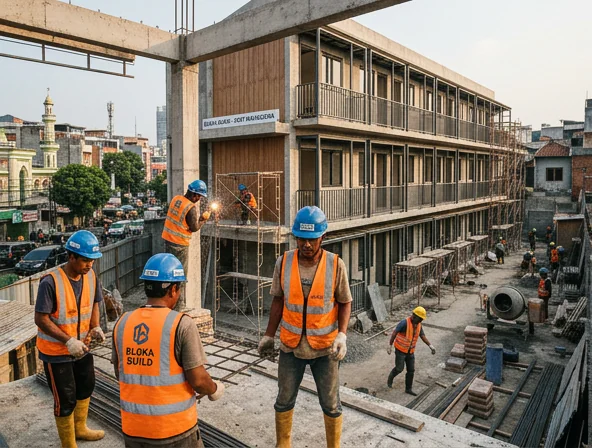

The difference between plaster and cement is often confusing for many people who are building or renovating a house.
Not a few homeowners think that both are the same job, even though plaster and cement have very different functions, stages, and roles in the world of construction.
Misunderstanding these two processes can impact the final wall results, ranging from an untidy appearance to problems with cracks and moisture later on.
For those of you who are using home building services, home renovation services, or home repair services, understanding the difference between plaster and cement will help you communicate more effectively with contractors, while ensuring the quality of work meets standards.
What is Plaster in Construction Work?
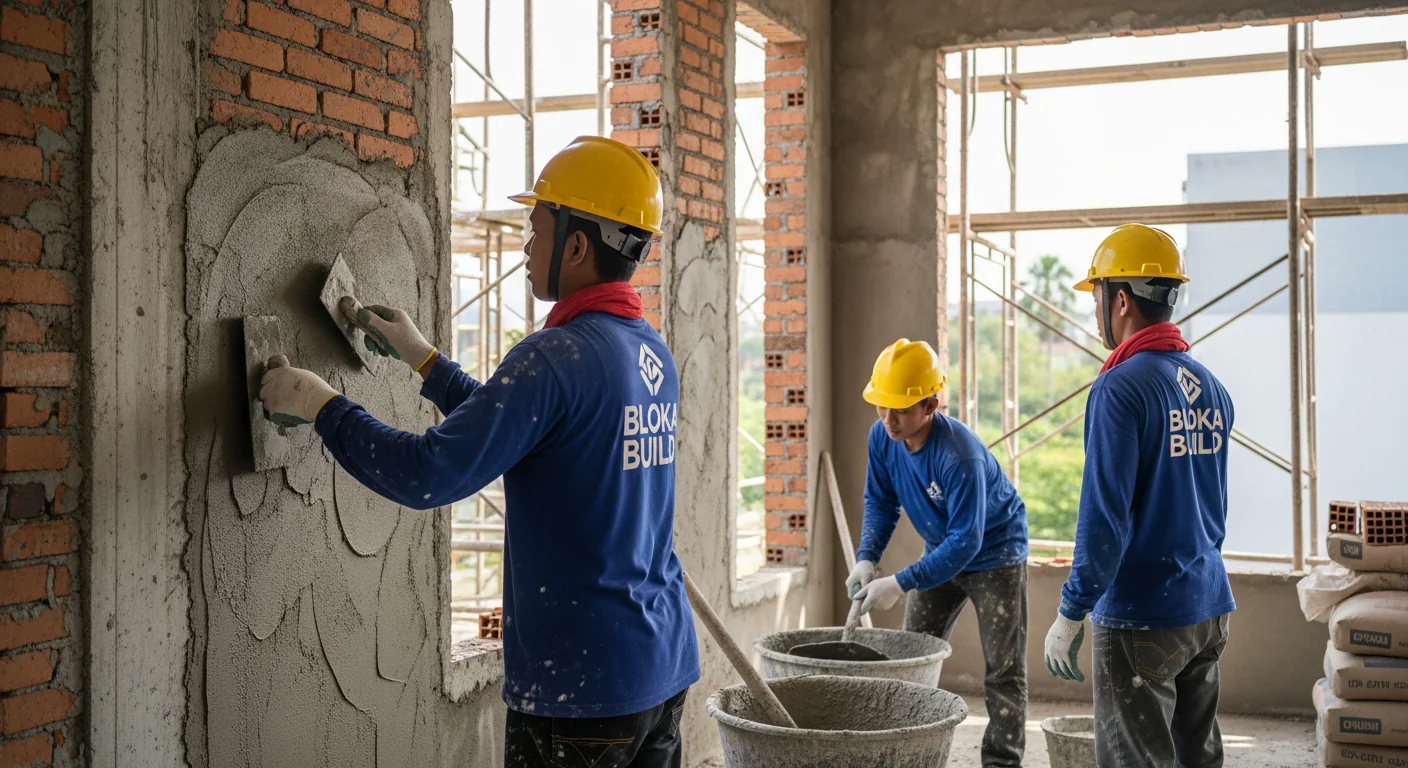
Plastering is the process of applying an initial coating to the surface of a brick or concrete block wall using a mixture of cement and sand.
The main purpose of plaster is to smooth out the rough surface of the wall due to the arrangement of the bricks, while also closing the gaps between the bricks so that the structure becomes stronger and neater.
In contract contractor practice, plastering is usually done after the brickwork is completed and the wall is deemed sufficiently dry. The plaster thickness generally ranges from 1–2 cm, depending on the initial level of the wall.
Plaster has a fairly important structural role because it is the base layer before entering the finishing stage.
If the plaster is not done properly, the next layers such as plaster and paint will easily be damaged, cracked, or peeled.
The Main Function of Plaster in Buildings
Plaster is not just an aesthetic stage, but has several important technical functions, including:
First, plaster serves to level the wall surface. Brick or concrete blocks naturally have uneven surfaces, so plaster is the solution for creating a flat surface ready for finishing.
Second, plaster increases the strength of walls. The cement and sand mixture helps bind the masonry more solidly, making the walls more resistant to vibrations and weather changes.
Third, plaster helps reduce water seepage. In wet areas like bathrooms or kitchens, proper plaster serves as the initial layer before waterproofing, especially in bathroom renovation projects. kitchen renovation services.
What is aci and why is it so important?
Aci is a finishing layer applied over plaster using fine cement or a special plaster. Unlike structural plaster, aci emphasizes a smooth, neat, and paint-ready finish.
In home construction and renovation work, plastering is a crucial step because it determines the overall visual appearance of the wall. A well-plastered wall that isn't plastered will look rough and difficult to paint with optimal results.
Cement is usually applied in thin layers, only a few millimeters, and requires careful workmanship to ensure the surface is completely smooth and without bumps.
The Function of Plaster in Wall Finishing
The primary function of plaster is to smooth the surface of the plaster. This layer seals the rough pores in the plaster, allowing the paint to adhere better and more evenly.
Furthermore, plaster also enhances the aesthetics of a room. Well-plastered walls will appear cleaner, more modern, and more professional, making them ideal for both private residences and commercial buildings such as offices and shophouses.
In office contractor projects or commercial fit-out services, the quality of the plaster is very important because it is directly related to the professional image of a building.
The Difference Between Plaster and Cement in Terms of Function
The most fundamental difference between the two lies in their function. Plaster serves as a base layer to level and strengthen walls, while cement serves as a finishing layer to smooth and beautify the surface.
Plaster is applied first and is thicker. Meanwhile, plastering can only be done after the plaster is completely dry and strong, as plaster is not designed to support weight or maintain extreme flatness.
A common mistake in the field is trying to replace the function of plaster with cement, even though cement will not be able to cover walls that are wavy or structurally uneven.
The Difference Between Plaster and Aci in Terms of Material
Plaster uses a mixture of cement and sand in specific proportions, depending on the strength requirements and the condition of the wall. The sand used is usually mortar sand or fine, sifted sand.
Meanwhile, plaster uses pure cement or an instant plaster product with a very fine texture. This plaster material is designed to be easy to spread and produces a smooth surface.
In the practice of home architectural services, the selection of plaster and mortar materials is often adjusted to the design concept and environmental conditions, especially for buildings in damp or crack-prone areas.
The Difference Between Plaster and Cement in Terms of Processing Time
Plastering requires a longer processing and drying time. Once the plaster is finished, it usually takes several days for it to dry completely before the plaster can be applied.
Aci, while faster to apply, still requires great precision. Applying too quickly before the plaster has completely dried can result in hairline cracks or peeling.
In large-scale projects such as boarding house and shophouse contractors or special facility contractors, timing between plastering and plastering is an important factor so that the project is completed on time without sacrificing quality.
Common Mistakes in Plastering and Cement Work
One common mistake is applying plaster that's too thin or uneven. This forces the plaster to work too hard to cover up imperfections, ultimately resulting in a less-than-perfect finish.
Another mistake is using low-quality materials. Substandard cement or excessively dirty sand can cause the plaster to crack easily and the mortar to adhere poorly.
Furthermore, insufficient curing or post-plaster maintenance is often overlooked. This maintenance is crucial for preventing premature cracking and maintaining wall strength.
The Importance of Plaster and Cement in Home Renovation
In home addition projects or home renovations, plastering and plastering are often key to ensuring the old and new look blends seamlessly. The difference in texture between old and new walls can be minimized with proper plastering and plastering techniques.
When renovating bathrooms and kitchens, the quality of the plaster also affects the walls' resistance to moisture. Good plaster provides a strong foundation for installing ceramic tiles or other finishes.
Why Should You Use a Professional Contractor?
Using a professional contractor like Bloka Build ensures that every stage of the work is carried out according to technical standards. Their experienced team understands when the plaster is ready to be applied, which materials are most suitable, and what the ideal final result should be.
As a home building service provider in Palembang, Bloka Build is also accustomed to handling various needs, from residential homes, renovations, to commercial buildings and special facilities with consistent workmanship quality.
Conclusion
Understanding the difference between plaster and cement is a crucial first step for anyone planning to build or renovate a home. Plaster serves as the visual and structural foundation for walls, while cement serves as the finishing touch, determining beauty and neatness.
With proper understanding, you can avoid common mistakes, save on future repair costs, and achieve a more durable and aesthetically pleasing building.
Trust your building work to Bloka Build
If you're planning to build a new home, renovate, or repair a building in Palembang, trust Bloka Build. We provide home building, renovation, and contracting services with professional and transparent work standards.
Contact Bloka Build now for a free consultation and create a building that is strong, neat and has long-term value with our team of experts.