
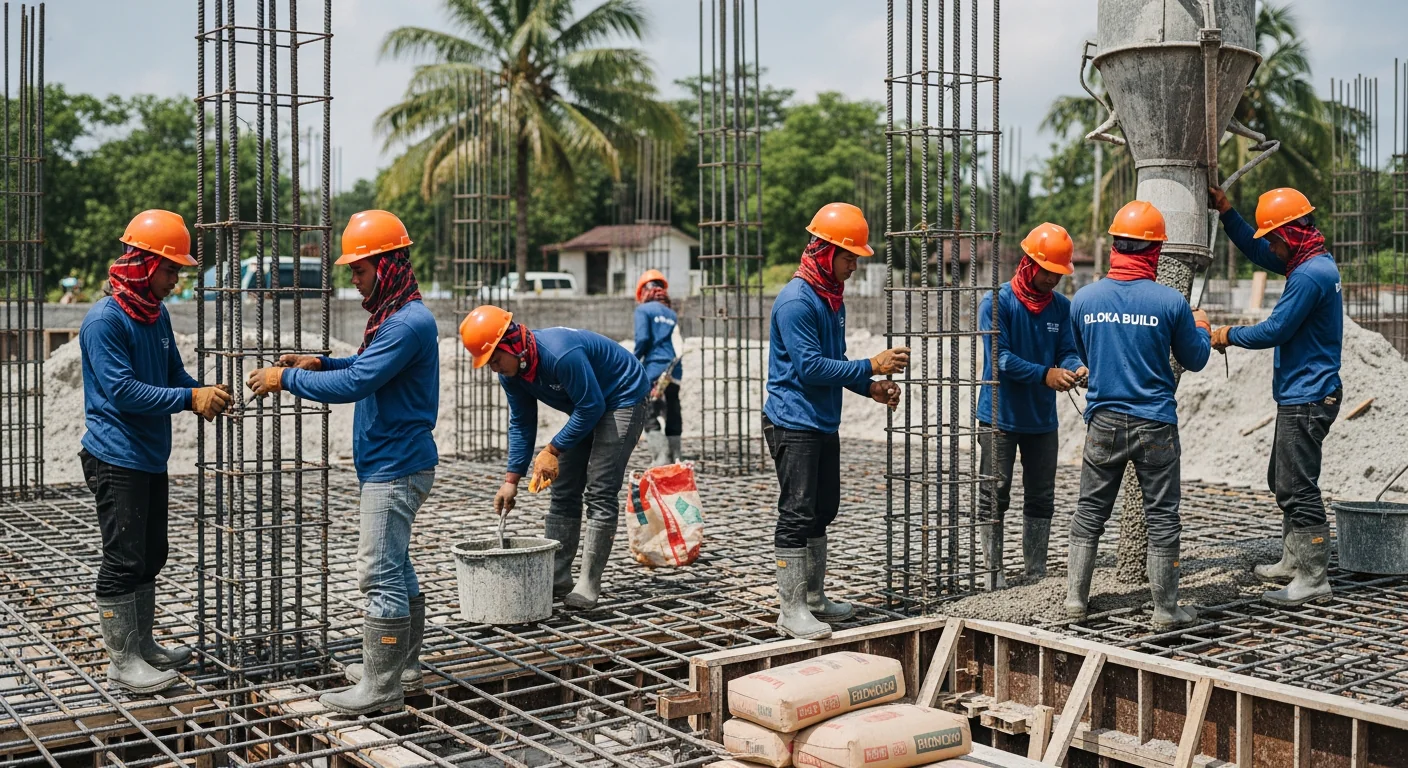
The chicken claw foundation is a construction engineering innovation widely used for buildings requiring strong and stable structures. This foundation system is known for its ability to support building loads evenly, especially in unstable soil conditions.
In the modern construction world, choosing the type of foundation is not only a technical matter, but also a strategy to ensure the building has long-term durability, is safe, and is cost-efficient.
For those of you who are planning construction or renovation, understanding the foundation system is very important.
Good in project Palembang house building services, property development, or commercial projects such as offices and shophouses, the right foundation will determine the overall quality of the building.
This is where the role of home architect services and professional construction teams becomes crucial in determining structural solutions that suit land conditions and building needs.
Understanding Chicken Claw Foundations in Building Construction
A chicken claw foundation is a foundation system consisting of a reinforced concrete slab combined with concrete pipes or cylindrical pillars embedded in the ground.
This structure resembles a “claw” that grips the ground, so it can distribute the building load more evenly.
Unlike conventional foundations such as river stone foundations or pile foundations, this system is designed to overcome the problem of soft soil, swampy soil, or soil with low bearing capacity.
Due to its flexible yet strong characteristics, this foundation is often used in multi-storey buildings, commercial buildings, and infrastructure projects.
In practice, the use of chicken claw foundations isn't limited to large projects. In modern residential projects, especially those with complex designs or high structural requirements, this system is increasingly being implemented by professional contractors.
History and Basic Concept of Chicken Claw Foundation
The concept of chicken claw foundations was first introduced by an Indonesian engineer, who designed this system to address the challenges of building on soft ground.
The main principle is to expand the contact area between the building structure and the ground, so that the pressure received by the ground becomes smaller.
The reinforced concrete slab serves as the primary element distributing the load, while the concrete pipes act as shear-resisting elements and provide vertical stability. The combination of the two creates a structural system that is both robust and adaptable to ground conditions.
In home renovation or new construction projects, understanding this concept helps building owners and contractors determine the most efficient type of foundation, both technically and budgetarily.
The Function of Chicken Claw Foundations in Building Structures
In general, chicken claw foundations have several main functions that are very important in construction:
First, the foundation serves as the primary supporting element, transferring the building's load to the ground. With an even load distribution system, the risk of land subsidence or structural cracks can be minimized.
Second, this system improves building stability on low-bearing soils. In certain soil conditions, conventional foundations are often insufficient to support the building's weight, requiring more complex solutions.
Third, chicken claw foundations help extend the lifespan of a building. A stable structure from the start reduces the risk of damage to other building elements, such as walls, floors, and roofs.
In home improvement projects, inadequate foundations are often the primary cause of structural damage. Therefore, selecting the right foundation from the outset is a valuable long-term investment.
Advantages of Chicken Claw Foundations Compared to Other Systems
One of the reasons why chicken claw foundations are often chosen is their advantages compared to other foundation systems.
First, this system has a high bearing capacity and can withstand the loads of multi-story buildings. This makes it ideal for two-story homes, office buildings, and commercial facilities.
Second, this foundation is relatively stable against ground movement. In soft soil or soil with a high water content, the structure can still maintain its balance.
Third, design flexibility is an added advantage. In projects involving additional rooms, changes to the layout, or future building developments, a footbridge foundation offers greater flexibility than a conventional foundation.
Fourth, this foundation supports modern architectural design. In the project kitchen renovation services, bathroom renovation services, or complex interior design, a strong foundation structure allows for design exploration without compromising building safety.
Implementation Shortcomings and Challenges
Despite its many advantages, the chicken claw foundation also presents its own challenges. One of the main ones is its relatively higher construction costs compared to conventional shallow foundations. The construction process also requires skilled labor, precise structural calculations, and high-quality materials.
In addition, the work takes longer because it involves the process of casting, embedding concrete pipes, and curing the concrete which must meet technical standards.
However, when viewed from a long-term perspective, investing in a strong foundation is actually more economical because it reduces repair costs, structural renovations, and the risk of building damage in the future.
Stages of Making Chicken Claw Foundations
The process of building a chicken claw foundation requires careful planning and professional personnel. The following are the general stages involved in a construction project:
The first stage is a land survey. The technical team will analyze the soil conditions to determine the appropriate foundation depth and dimensions. This stage typically involves the services of a home architect and geotechnical experts.
The second stage is structural planning. At this stage, the concrete slab and concrete pipe designs are adjusted to suit the building's loads and soil conditions. Detailed structural calculations are performed to ensure the building's safety.
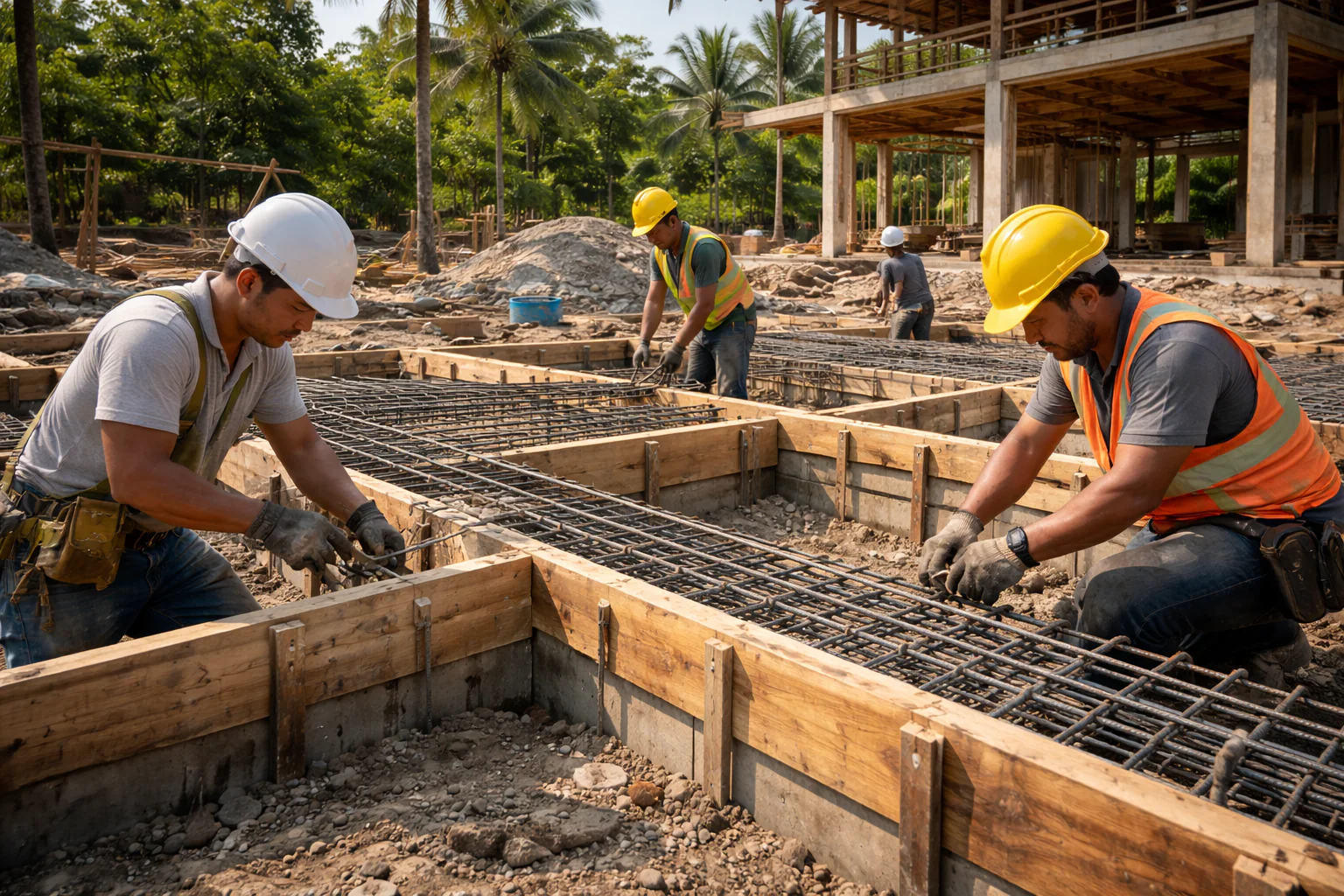
The third phase is field work, which includes excavation, concrete pipe installation, concrete slab casting, and concrete curing. This phase is typically handled by a contractor with experience in structural projects.
The fourth stage is evaluation and testing. After the foundation is complete, a structural quality check is performed before construction proceeds to the next stage.
In commercial projects such as boarding house & shophouse contractors, office contractors, or commercial fit out services, This stage is very crucial because it concerns the safety and sustainability of the building's function.
Application of Chicken Claw Foundations in Various Types of Buildings
Chicken claw foundations can be applied to various types of buildings, both residential and commercial.
In residential buildings, this system is suitable for multi-story houses or homes with complex designs. In home construction projects, this foundation guarantees better structural stability than conventional foundations.
In commercial buildings, such as shophouses, offices, and specialized facilities, this foundation can support greater loads. In specialized facility contractor projects, the use of chicken claw foundations is often the primary choice to ensure the long-term safety of the structure.
In addition, this system is also used in large renovation projects, especially when the old building structure needs to be strengthened to add floors or expand the building.
Cost Considerations in Using Chicken Claw Foundations
In terms of cost, chicken claw foundations tend to be more expensive than conventional foundations. However, the benefits are commensurate with the expense.
Investing in a strong foundation will reduce the risk of future repairs. In the long term, building maintenance costs will be lower because the main structure is designed to high safety standards.
For building owners, understanding foundation costs also helps them prepare a realistic project budget. With the help of a professional team, cost calculations can be tailored to their needs and financial capabilities without compromising the quality of the structure.
The Role of Professional Contractors in the Implementation of Chicken Claw Foundations
The use of chicken claw foundations cannot be done haphazardly. It requires a professional team that understands the technical aspects, planning, and implementation of the project.
An experienced contractor not only ensures the quality of the structure, but also helps building owners optimize the budget and construction time.
In home renovation or new construction projects, collaboration between architects, technicians and contractors is the key to the project's success.
Bloka Build, a construction services provider in Palembang, offers integrated solutions from design planning to project implementation. With experience handling a wide range of projects, Bloka Build is ready to provide professional, transparent, and high-quality services.
Foundation as a Long-Term Investment in Buildings
Chicken foot foundations are not just structural elements, but long-term investments in building quality. With optimal load distribution, high structural stability, and design flexibility, they are an ideal solution for a wide range of construction projects.
For those of you who want to build a new house, renovate a building, or develop a commercial property, choosing the right foundation is the first step that determines the success of the project.
If you want to ensure that your building has a strong, safe structure and meets technical standards, entrust your project to a professional team.