
Villa development zoning regulations in Bali are a crucial topic for anyone planning to build, renovate, or develop property on the Island of the Gods.
Bali's popularity as an international tourist destination has led to a continuous increase in villa development, both for investment purposes, private residences, and hospitality businesses.
However, this high level of interest is also balanced by strict spatial planning regulations to maintain the balance between the environment, culture, and tourism sustainability.
Without a proper understanding of regulations, development projects risk facing permit rejection, administrative sanctions, and even building demolition.
Therefore, whether you are using villa building services, villa renovation services, or even just adding a room to a house, it is mandatory to understand how the zoning system is implemented in Bali before starting a project.
This article will comprehensively discuss villa zoning regulations in Bali, the types of zones, the risks of violations, and safe strategies for building or renovating a villa with a professional contractor.
Understanding the Concept of Spatial Zoning in Bali
Zoning is a system for regulating spatial use established by local governments based on function, regional character, and environmental carrying capacity. In Bali, zoning takes into account not only technical aspects of development but also customary and cultural values, as well as the sanctity of a particular area.
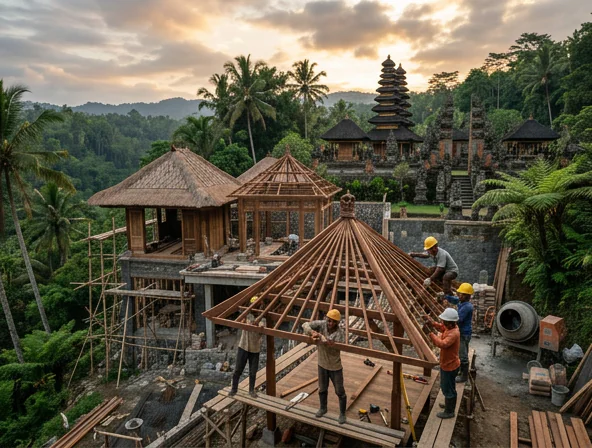
Unlike other regions, development in Bali must be in line with the Tri Hita Karana philosophy, namely the balance of the relationship between humans and God, humans and humans, and humans and nature.
Therefore, villa construction cannot be carried out freely even though the land is legally privately owned.
This zoning is the main basis for issuing permits, both for new construction, kitchen renovation services, bathroom renovation services, and large-scale projects such as commercial fit out services.
Legal Basis for Villa Development Zoning Regulations
The zoning regulations for villa development in Bali refer to several main rules, including:
RTRW (Regional Spatial Planning) of Bali Province
RDTR (Detailed Spatial Planning) of Regency/City
Regional Regulation (Perda) on Spatial Planning
Regulations related to PBG (Building Construction Approval)
The RTRW determines the general function of an area, while the RDTR regulates in more detail the height of buildings, floor area, boundaries, and building designation.
This is the reason why the role of experienced villa architects and contractors is very important from the planning stage, not only when physical construction begins.
Types of Zones in Villa Development in Bali
Tourism Zone
A tourism zone is an area officially designated for tourism activities, including the construction of villas, hotels, resorts and supporting facilities.
In this zone, building a villa is relatively easier as long as it meets technical requirements such as building height, boundary distance, and building base coefficient.
The majority of investors choose this zone because it is relatively safe from a regulatory perspective and is suitable for collaboration with contract contractors and project management contractors.
Residential Zone
Residential zones are generally designated for local residents. Villa construction in these zones is still permitted, but with strict restrictions, particularly regarding building function and social impact. Commercial villas are often restricted or require additional permits.
For light renovation projects such as villa repair services or adding rooms to a house, this zone is still possible as long as it does not change the main function of the building.
Agricultural Zone
Agricultural zones are the most sensitive areas. Villa development in these zones often becomes a source of conflict due to conflicts with land use. Many cases of illegal villa construction occur due to development in agricultural zones without changing the land use.
In this zone, even specialized facility contractors must be extra careful because the risk of demolition is very high.
Protected Zones and Sacred Areas
This zone includes protected forest areas, riverbanks, beaches, and areas around temples. Villa construction in this area is generally prohibited or strictly restricted.
Small renovations such as bathroom renovation services even if the building is located near a protected area, approval is still required.
Impact of Zoning Violations on Villa Owners
Ignoring zoning regulations isn't just an administrative matter; it can have significant financial and legal consequences. Some common risks include:
PBG rejection or permit revocation
Large administrative fines
Building sealing
Demolition order
Decrease in property investment value
Many villa owners are initially tempted by low land prices, but ultimately suffer losses due to building in unsuitable zones. Therefore, engaging a professional contractor from the outset is a strategic move.
The Role of Contractors and Architects in Zoning Compliance
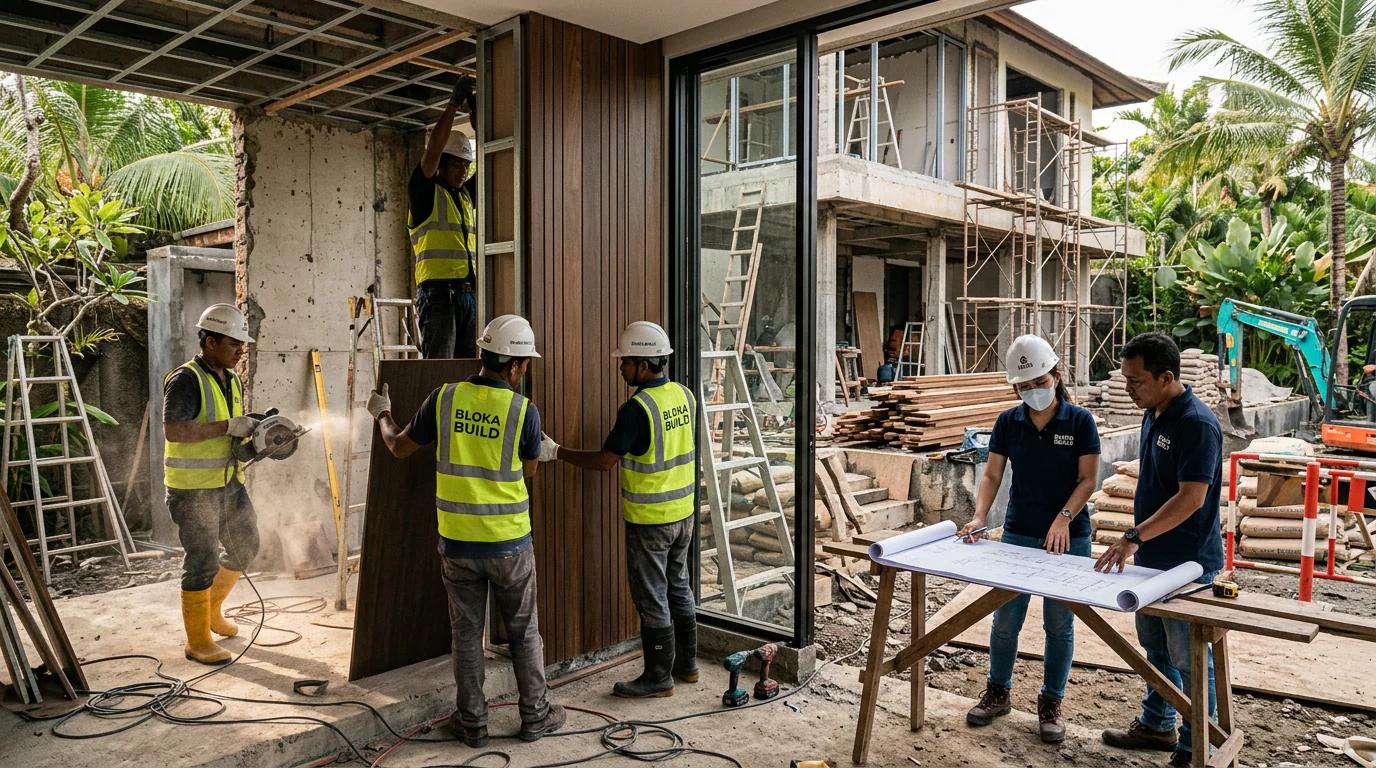
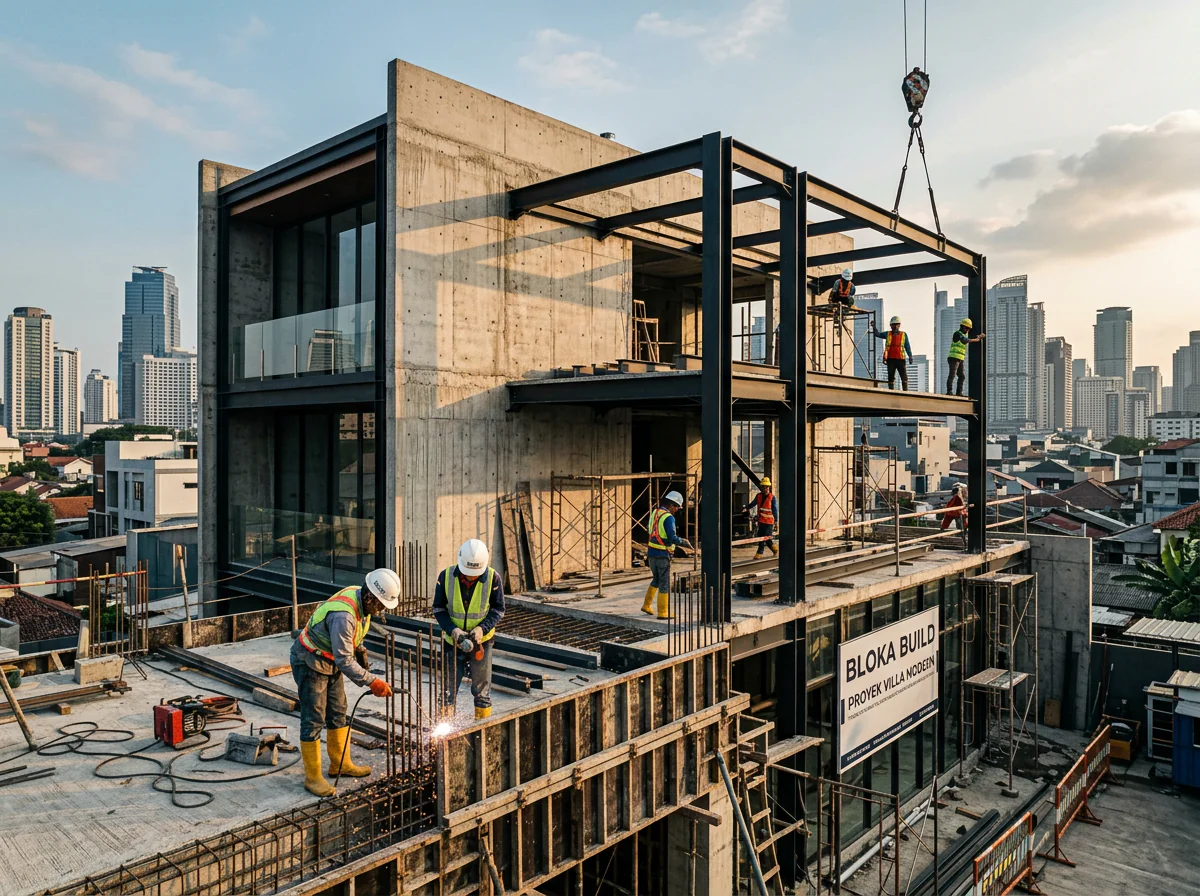
Contractors are not just builders but also strategic partners in ensuring projects are executed according to regulations. Experienced contractors will collaborate with villa architects to align designs with local zoning regulations.
In practice, the contractor will help:
Analysis of land suitability with zoning
Building design adjustments
Management of technical documents supporting PBG
Supervision of construction to ensure it complies with permits
This applies to both new construction, villa renovation services, and advanced projects such as commercial fit-out services for villas that function as tourist accommodation.
Villa Renovation and Zoning Rules to Consider
Many villa owners assume renovations don't require zoning regulations. However, renovations that alter the structure, size, or function of a space still require compliance with regulations.
Renovating a kitchen, bathroom, or adding a room can trigger new permit requirements if they exceed the technical limits set by the RDTR. This is where it's crucial to work with kitchen renovation services, bathroom renovation services, and contractors who understand Bali's local regulations.
Safe Strategy for Building a Villa According to Zoning
In order for the project to run safely and sustainably, there are several strategies that can be implemented:
Do a zoning check before purchasing land
Use the services of experienced architects and contractors in Bali
Avoid building without a permit even if the land is privately owned.
Prioritize design that is adaptive to regulations
Build in stages according to applicable permits
This strategy has proven effective in avoiding legal risks and maintaining long-term investment value.
Zoning and the Future of Villa Investment in Bali
The Balinese government is increasingly serious about managing development. Going forward, zoning regulations will become stricter, particularly regarding the environment and sustainability. Investors who comply with the rules will actually benefit more because their properties will have strong legal standing and high resale value.
Villas built according to zoning are also easier to manage, insure, and market to international tourists.
Build a Safe and Legal Villa with Bloka Build
Understanding zoning regulations for villa development in Bali is no longer an option, but a necessity. Whether you're building from scratch, renovating, or developing a commercial property, zoning compliance is key to project success.
If you are looking for a professional partner for villa construction services, villa renovation services, villa repair services, or special facility contractor projects, Bloka Build is ready to assist you from the planning stage until the building is ready for use.
With an experienced team and a strong understanding of local regulations, Bloka Build helps make your dream villa a reality safely, legally, and at a high value.