
What is a buried tank is a question that is increasingly arising, especially among owners of modern homes, villas, and commercial buildings who prioritize the neatness and efficiency of their water systems.
In the world of construction and building renovation, choosing a water storage system is no longer just a matter of function, but also concerns aesthetics, comfort, and long-term sustainability.
Good for project villa building services, villa renovation services, new home construction, and commercial facility development, the buried tank system is now widely recommended by contractors and building planners.
Not only applied to private residences, this concept is also starting to be commonly used in office contractor projects, commercial fit out services, to special facility contractors who require a stable and hidden water supply.
This article will discuss in detail what a buried tank is, how it works, its advantages and disadvantages, as well as tips for proper installation, especially for new homes to avoid problems later on.
What is a buried reservoir?
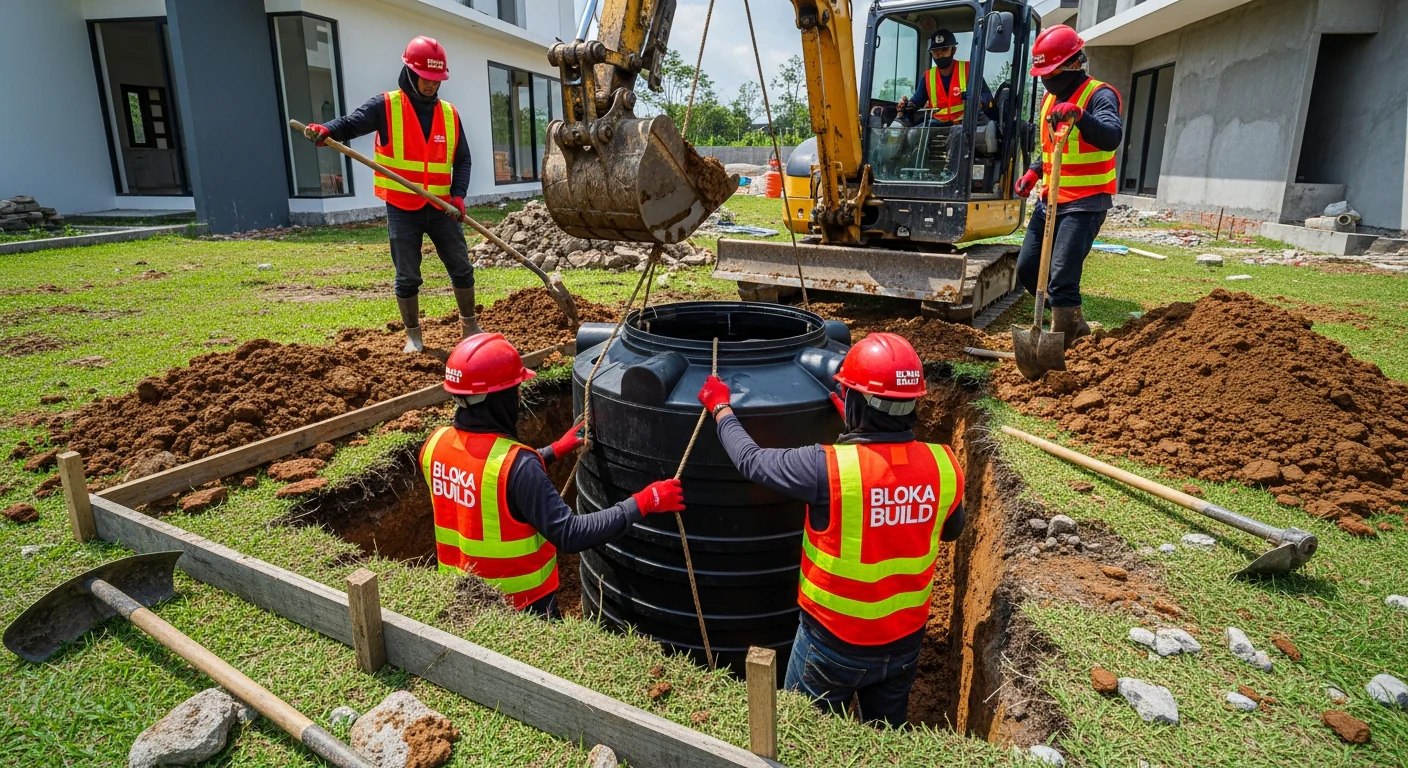
A buried tank is a clean water storage system installed below ground level, usually buried in the yard, carport area, or certain parts of the building that have been planned from the start of construction.
Unlike conventional water tanks that are placed on towers or building roofs, buried tanks are hidden and do not interfere with the visual appearance of the building.
In modern construction practices, buried tanks are often part of an integrated utility system.
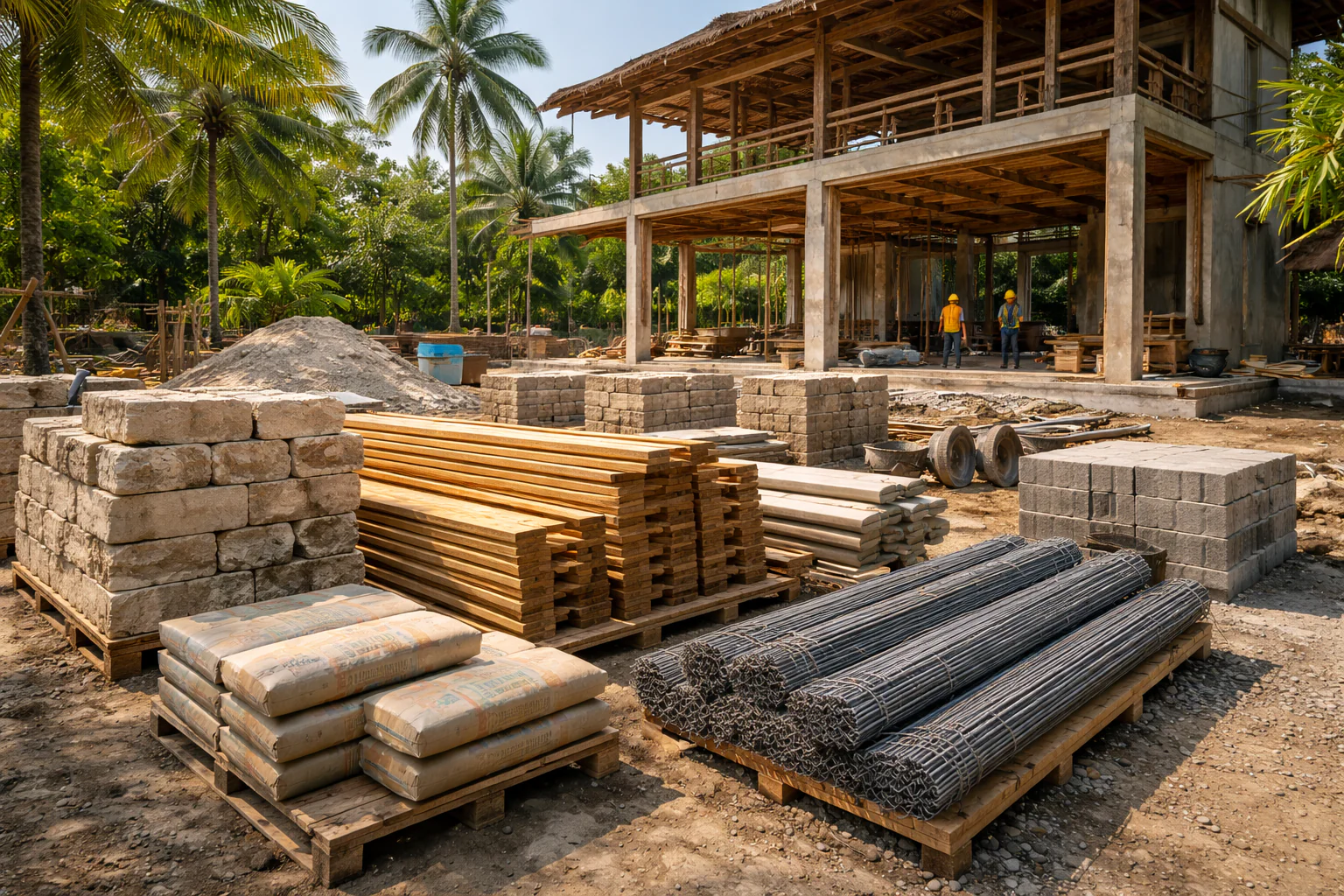
Therefore, its installation is ideally carried out simultaneously with the construction or major renovation process, such as adding a room to a house, renovating the kitchen and bathroom, or building a villa or minimalist-concept residence.
Many villa architects even use buried tanks as a design standard, as they are considered to provide design flexibility without sacrificing the building's technical requirements.
How a Ground Tank Works
In general, the working system of an underground water tank is not much different from a conventional water tank. The differences lie in its position, protection system, and more planned water distribution management.
The following explains the stages of how it works:
1. Water Source Enters the Underground Tank
Water entering the underground reservoir can come from various sources, such as a PDAM connection, a drilled well, or a filtered infiltration well. At this stage, the water flows through an inlet pipe to the underground reservoir.
In new home, villa, or commercial building construction projects, the water pipe route is usually planned from the start by the contractor to avoid the risk of re-dismantling at a later date.
This is very important, especially for contracting projects that prioritize time and cost efficiency.
2. Water is stored in underground reservoirs
Once entered, the water is stored in a reservoir embedded in the ground. Because it's below ground level, the water temperature in the reservoir tends to be more stable and isn't directly affected by the sun's heat.
This advantage is often a primary consideration in villa construction and renovation projects, especially for buildings used as long-term residences or premium rental properties that prioritize user comfort.
3. Water is pumped out using a pump
Because the reservoir is located below, this system requires a water pump to transport water to the point of use. The pump operates automatically, usually assisted by a float system or pressure sensor.
In a proper installation, the pump will stop working when the water level in the tank reaches a certain level and restart when the water level decreases. This automatic system is very helpful in maintaining stable water pressure, both in residential homes and commercial buildings such as offices and business facilities.
4. Water Distribution to Taps or to the Upper Tank
The pumped water can be directly channeled to the tap, bathroom, kitchen, or diverted first to the upper tank as a backup for gravity distribution.
In multi-story buildings or special facilities, a combination of buried and overhead tanks is often used to maintain a steady water supply even during power outages. This system is widely used in office contractor projects and commercial buildings with high water demands.
Advantages of Buried Tanks
The use of buried tanks is not without reason. They offer a number of significant advantages that make them a popular choice in modern construction.
1. A neater home aesthetic
One of the main advantages of buried tanks is that they don't disrupt the building's appearance. Because they're hidden underground, there's no longer a large tank to disrupt the facade or roof design.
This is very beneficial for those of you who are doing kitchen renovation services, bathroom renovation services, or adding a new room, because the interior and exterior design can remain clean and minimalist without visual compromise.
2. More Stable Water Temperature
Because it's protected by the ground, the water temperature in the underground tank is relatively cooler and more stable. This makes the water more comfortable to use, especially for daily activities like bathing or washing.
In the long term, stable water temperature also helps maintain the quality of pipe and pump materials, thus extending the service life of the water installation system.
3. Save Space in the Upper Area
By moving the tank underground, the upper area of the house can be maximized. The roof space can be used for gardens, solar panels, or other purposes without being disturbed by the tank structure.
This advantage is particularly relevant for homes with limited land or commercial buildings that require space optimization, including commercial fit-out service projects and office renovations.
Disadvantages of Buried Tanks
Despite having many advantages, buried tanks also have several disadvantages that need to be considered from the start.
1. More Complicated Installation
Installing a buried reservoir requires careful planning and precise technical workmanship. The excavation process, protective structure installation, and piping system must be carried out correctly to avoid future problems.
Therefore, it is highly recommended that the installation of buried tanks be carried out by experienced contractors, not just daily workers without systematic planning.
2. Care is more difficult to access
Because they're underground, access to underground tanks isn't as easy as conventional tanks. If dirt, sediment, or technical issues arise, maintenance requires special access.
This is why planning inspection holes and service access is crucial in any major construction or renovation project.
3. Leakage Risks Are Harder to Detect
If a leak occurs, damage to the underground tank isn't always immediately apparent. Water can seep into the ground and only be detected after a drop in water pressure or dampness appears in a specific area.
To minimize this risk, selecting quality tank materials and professional installation are non-negotiable factors.
Tips for Installing a Ground Tank for a New Home
To ensure your tank system functions optimally and is long-lasting, here are some important tips to keep in mind.
1. Choose a tank that has an anti-float system.
One risk of buried tanks is being pushed upwards by groundwater pressure, especially during the rainy season. Therefore, choose a tank equipped with an anti-float system or structural lock.
In new home projects, villas, and commercial buildings, the use of tanks with this feature will provide extra security without the need for additional modifications.
2. Make sure the reservoir location is easily accessible.
Even though the reservoir is underground, it still requires maintenance access. Ensure there's an inspection hatch that's easily accessible without requiring dismantling the main structure.
This site planning is usually done in conjunction with utility design by contractors and architects to avoid clashes with other building structures.
3. Adjust the excavation depth to the tank dimensions.
The excavation depth must be adjusted to the size of the reservoir and the need for protective layers such as backfill sand and retaining concrete. Excavations that are too shallow or too deep can cause structural problems later on.
In professional practice, these measurements and calculations are the standard work on medium to large scale construction and renovation projects.
Choosing a buried tank system is not just a technical decision, but also a long-term investment in the comfort, aesthetics, and value of your building.
With proper planning and professional installation, this system can provide a stable, clean, and long-lasting water supply for various types of buildings, from residential homes to commercial facilities.
If you are planning a new home construction, renovation, room addition, or commercial project, Bloka Build is ready to help as a trusted construction partner.
With an experienced team and a planned approach, Bloka Build delivers building solutions that are functional, aesthetic, and tailored to your needs.
Consult your building needs with Bloka Build now, and create a neat, modern, and high-quality home utility system.