
Home electrical power is one of the most crucial aspects that is often overlooked when building or renovating a building.
Many homeowners only realize the importance of calculating electrical power when the MCB frequently trips, the electricity is not strong enough to power several appliances at once, or the electricity bill actually increases without them realizing it.
In fact, knowing your power needs from the start can help you plan a safe, comfortable, and efficient home for the long term.
Whether you are building a house, villa, boarding house, shophouse, or doing partial renovations such as bathroom renovations, kitchen renovations, or adding a room to your house, understanding your electricity needs is a basic step that should not be missed.
Why is it important to know your home's electrical power needs?
Determining a home's electricity needs is not just a matter of wattage or VA, but is directly related to installation safety, occupant comfort, and cost efficiency.
Too little power will disrupt household activities, while too much power can cause wasted monthly costs.
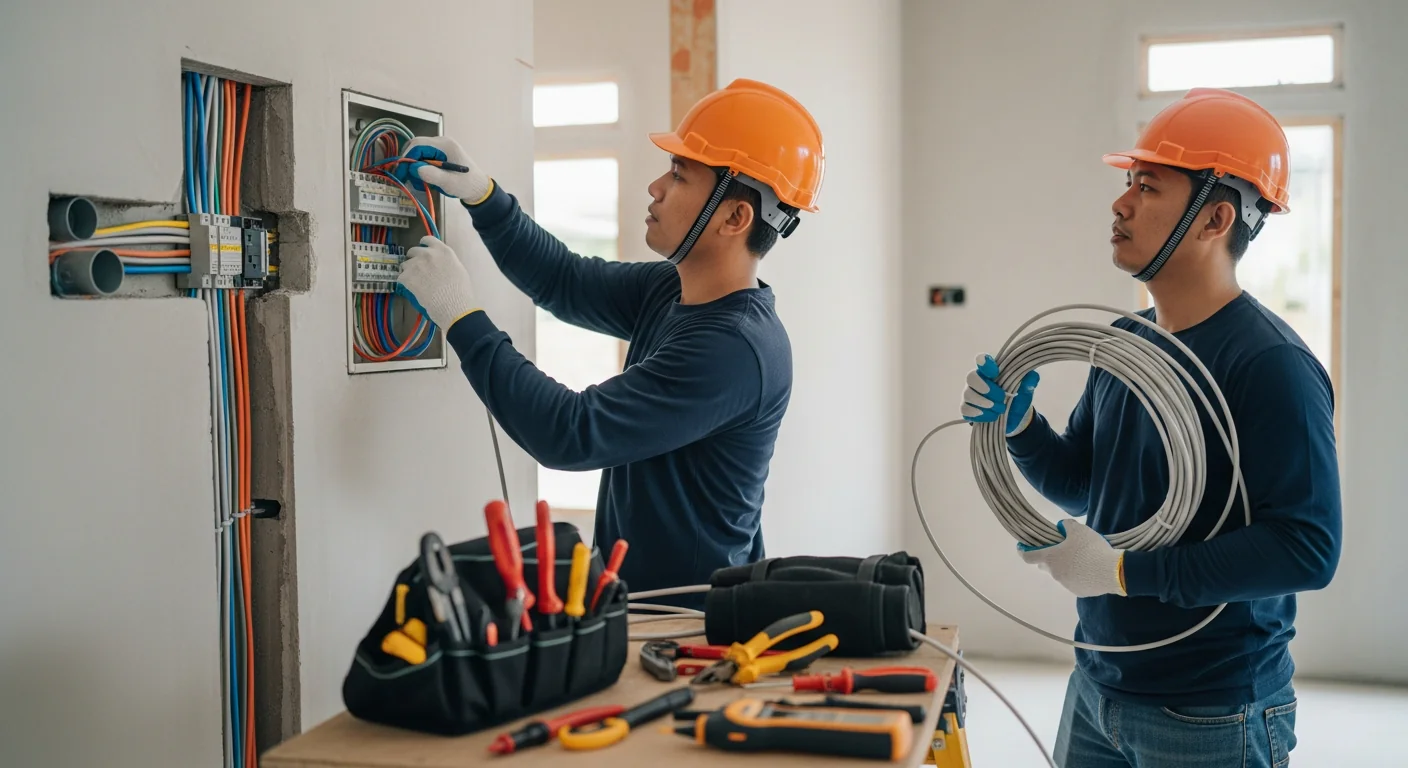
In professional construction practices—whether for residential projects, villa construction services, or office contractors—electrical calculations are always part of the technical planning.
This aims to ensure that the electrical system is able to support all building needs without the risk of short circuits or overheating.
Furthermore, modern homes tend to use more electronic devices, from air conditioners and water heaters to electric stoves and smart home systems. All of these require careful power calculations from the outset.
Understanding What Home Electrical Power Is
Household electrical capacity is the maximum capacity of electricity that can be used simultaneously within a building. In Indonesia, electricity is generally measured in Volt-Amperes (VA), such as 900 VA, 1,300 VA, 2,200 VA, and up to 6,600 VA or more.
The higher the home's electrical capacity, the more electrical appliances can be used simultaneously without interruption. However, increased power also comes at a cost of installation and monthly electricity rates.
In the project villa renovation services or villa renovation services, increasing electrical power is often a primary need, especially if an old building is to be adapted to a new, more modern function.
Factors Affecting Home Electricity Needs
The electricity needs of every home cannot be generalized. There are several key factors to consider before determining power capacity.
First, the building's area and number of rooms. A house with many rooms naturally requires more power than a smaller home, especially if there are additional space additions, such as adding a bedroom or renovating a kitchen with high-power electrical appliances.
Second is the number and type of electronic equipment. Air conditioners, refrigerators, washing machines, electric ovens, water pumps, and even water heaters are all devices that consume significant amounts of power.
In commercial buildings or commercial fit out services, power requirements can even increase drastically due to the intensive use of operational equipment.
Third is electricity usage patterns. A home occupied by a large family with a busy schedule will naturally have different power requirements than a home that is rarely occupied.
How to Identify Electrical Equipment in the Home
The first step in determining your home's electricity needs is to identify all the electrical equipment you use. You'll need to list all devices, from small to large, whether used daily or occasionally.
Appliances like lights, televisions, refrigerators, rice cookers, dispensers, air conditioners, and even gadget chargers need to be taken into account. Don't forget specialized equipment like an exhaust fan in a bathroom renovation or a kitchen hood in a modern kitchen renovation.
In professional projects handled by specialized facility contractors or villa architect services, this equipment list is usually made very detailed so that no electrical needs are missed.
Calculating Electrical Power Requirements Simply
Once you have your equipment list, you can begin to roughly calculate your power requirements. The principle is to add up the power (watts) of all the devices that are likely to be used simultaneously.
For example, if you turn on the AC, refrigerator, television, lights, and water pump at one time, then the total power of these devices must be below the electrical power capacity of the house.
However, it's important to remember that this calculation shouldn't be done too lightly. Ideally, there should be a power reserve to prevent the electrical system from operating at its maximum capacity. This is why professional contractor projects always plan electrical power with a safety margin.
Common Mistakes in Determining Home Electrical Power
One of the most common mistakes is choosing a power source solely based on the lowest monthly cost. As a result, homes often experience power outages when multiple appliances are turned on simultaneously.
Another mistake is not considering long-term planning. Many homeowners initially feel 1,300 VA is sufficient, but a few years later, they want to add air conditioning, a water heater, or even undertake major renovations.
In the case of villa renovation services or office contractors, this error can have serious consequences because building operations are highly dependent on electrical stability.
Electrical Power Requirements for Residential Homes
For a standard home with basic appliances, the power rating typically ranges from 1,300 VA to 2,200 VA. However, for a modern home with multiple air conditioners and additional electrical appliances, 3,500 VA or more is often the ideal choice.
If you're planning to add a room to your house or renovate your kitchen with modern electrical appliances, a power upgrade is almost always necessary. Therefore, it's best to calculate the power consumption simultaneously with your renovation planning.
Electrical Power Requirements for Villas and Commercial Buildings
Villas, shophouses, and commercial buildings have significantly higher power requirements. The use of air conditioning in multiple rooms, water heating systems, decorative lighting, and even security systems require professional power planning.
On the project villa building services For villa renovation services, electrical power is often adjusted to meet guest comfort standards. Similarly, in commercial fit-out projects and office contractors, electricity is the backbone of business operations.
The Role of Professionals in Electrical Power Planning
Determining your home's electrical capacity can be done independently, but for optimal and safe results, it's wise to involve a professional. Villa architects, experienced contractors, or building consultants typically have a more in-depth technical understanding of electrical systems.
They not only calculate current power needs but also estimate future needs. This is crucial to avoid having to repeatedly dismantle electrical installations during building expansion.
When Should You Increase Your Home's Electricity?
You may need to consider increasing your power output if you frequently experience MCB tripping, plan to add high-power electrical equipment, or undertake significant renovations to your building.
In many cases of modern bathroom renovations or kitchen renovations, the addition of water heaters and other electrical equipment is the main trigger for increased power requirements.
Increasing power from the start of a renovation will be much more efficient than doing it after the building is completed.
Tips for More Efficient Home Electricity
Besides determining the right power capacity, efficient electricity use is also important. Use energy-efficient electrical appliances, manage air conditioning wisely, and take advantage of natural lighting.
Building design also plays a significant role. A home with good ventilation and proper layout will reduce dependence on electrical appliances. This is why design planning by a specialized facility contractor or professional team is crucial for energy efficiency.
The Right Home Electrical Power is a Long-Term Investment
Knowing and determining your home's electrical capacity isn't just a technical matter, but an investment in long-term comfort and safety. A home with the right electrical system will be safer, more comfortable, and better prepared for future needs.
Whether you're building a new home, renovating, or expanding a commercial building, electrical power planning should be a top priority from the start.
Trust Your Building Planning to Bloka Build
If you want to build or renovate a building with careful planning—including accurate calculations of your home's electrical power—Bloka Build is ready to be your trusted partner.
Bloka Build has experience in handling various projects, ranging from residential homes, villa building services, villa renovation services, bathroom and kitchen renovations, adding rooms to houses, to commercial projects such as fit-outs and offices.
With a professional and transparent approach, Bloka Build helps you create buildings that are safe, comfortable, and meet your needs.
Consult your project with Bloka Build now, and realize your ideal building with proper electrical planning from the start.