
Types of water tanks are an important topic that is often overlooked when building or renovating. Yet, water tanks play a vital role in maintaining clean water supplies, whether for homes, villas, commercial buildings, or specialized facilities.
Choosing the wrong tank will not only impact water quality, but also maintenance costs and long-term comfort.
This article will discuss in depth the types, characteristics, and tips for choosing the right water tank so you don't make the wrong investment.
In practice, many projects such as private pool villa construction services, From villa renovation services to office contractors, water tank selection is a crucial part of a building's utility system. With the right understanding, you can achieve an efficient, hygienic, and durable water system.
Why is a Water Tank So Important in a Building?
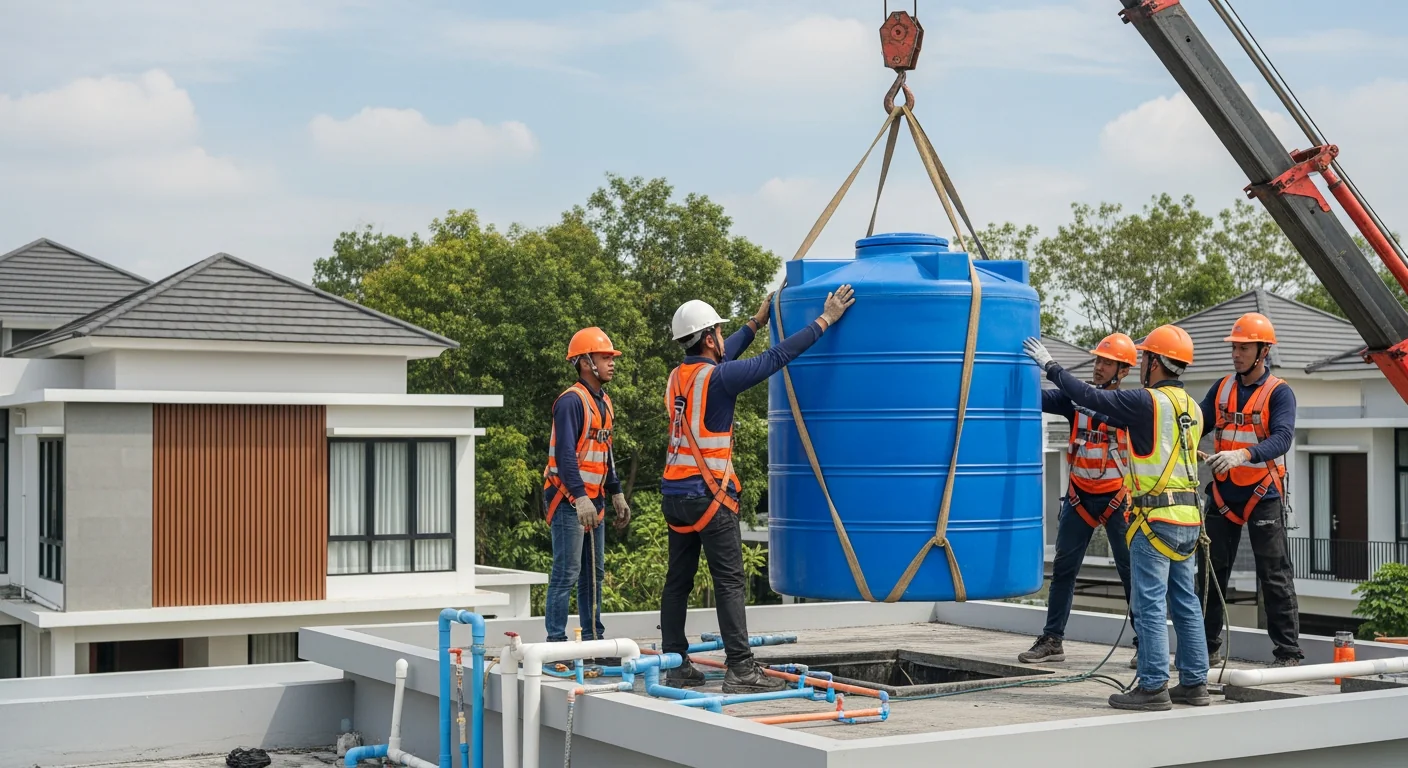
Water tanks serve as a reserve storage area for clean water, ready for use at any time. When the PDAM supply is interrupted or the water flow decreases, the tanks ensure that daily activities continue as normal.
This is why villa architects and special facility contractors always consider the capacity and type of tank from the design planning stage.
In addition, water tanks help stabilize water pressure, especially in multi-storey buildings or houses with several water points such as bathrooms, kitchens, and service areas.
On the project bathroom renovation services or kitchen renovation services, choosing the right tank can significantly increase the comfort of water use.
Types of Water Tanks Based on Material
Plastic Water Tank (PE – Polyethylene)
Plastic tanks are the most common type used in homes and small to medium-sized buildings. Polyethylene is known for its lightness, flexibility, and relative affordability.
The main advantages of plastic tanks are their rust resistance and ease of installation. Therefore, many contractors choose this type for residential projects, room additions, or medium-scale renovations.
In addition, modern plastic tanks are generally equipped with an anti-UV coating to prevent moss growth.
However, plastic tanks still have limitations. If the material is of poor quality, the tank walls can thin over time, affecting water quality. Therefore, careful consideration must be given to the brand and specifications selected.
Stainless Steel Water Tank
Stainless steel tanks are often used in commercial buildings, exclusive villas, or facilities that require high hygiene standards. This material is known for its strength, durability, and resistance to water reactions.
In villa construction and renovation projects, stainless steel tanks are often chosen for their sleek appearance and premium feel. Furthermore, stainless steel is opaque, making it highly effective at preventing the growth of moss and bacteria.
The downside is the relatively high price and heavier weight. Installation also requires careful structural calculations, especially if placed on top of a building or water tower.
Fiberglass Water Tank (FRP)
Fiberglass Reinforced Plastic (FRP) tanks are widely used in industrial settings, office buildings, and specialized facilities. This material combines the strength of glass fiber with a special resin, resulting in a tank that is strong and resistant to high pressure.
Office contractors and suppliers commercial fit out services Fiber tanks are often recommended for large capacity needs. These tanks are also resistant to temperature changes and are not prone to cracking.
However, the price of fiber tanks is relatively high and their maintenance requires special standards to ensure the inner layer remains safe for clean water.
Concrete Water Tank
Concrete tanks are usually constructed permanently and integrated into the building structure, either underground or above ground. This type is often found in older buildings or large-scale projects.
The advantages of concrete tanks are their extremely large capacity and resistance to pressure. However, the risk of leaks, cracks, and potential water contamination have made this type of tank less common in modern buildings.
When renovating old buildings, villa repair services often recommend replacing concrete tanks with more modern and hygienic materials.
Types of Water Tanks Based on Shape and Position
Vertical Water Tank
Vertical tanks are tall and ideal for confined spaces. This type is widely used in homes and buildings with limited land.
The main advantages of vertical tanks are space efficiency and better water pressure due to the height. It's no wonder these tanks are often recommended for home additions or multi-story home renovations.
Horizontal Water Tank
Horizontal tanks are elongated and typically placed on a roof or flat surface. This type is more stable and easier to access for maintenance.
In kitchen renovation projects or service area additions, horizontal tanks are often chosen because of their flexibility of placement and ease of pipe installation.
Planting Water Tank (Underground Tank)
Underground tanks are typically used for large buildings, luxury villas, or commercial facilities. This type of tank provides a cleaner appearance because it's not visible from the outside.
However, planning for a buried reservoir requires careful consideration. Waterproofing systems, maintenance access, and structural security are crucial factors typically handled by experienced, specialized facility contractors.
Characteristics of a Quality Water Tank
A good water tank is determined not only by its material, but also by technical details such as wall thickness, inner lining, and closing system. A quality tank has a smooth inner surface, making it resistant to moss and bacteria growth.
Additionally, the tank lid must be tight to prevent dirt, insects, or small animals from entering. Air vents also need to be well-designed to maintain stable pressure inside the tank without compromising water cleanliness.
Tips for Choosing the Right Water Tank
Adapt to Building Needs
Every building has different water requirements. A residence is certainly different from a villa, office, or commercial building. Therefore, it's important to calculate daily water requirements before determining the tank capacity.
In villa construction service projects, this calculation usually takes into account the number of rooms, bathrooms, kitchens, and pool or garden areas.
Choose Environmentally Friendly Materials
The surrounding environment greatly influences the choice of tank material. For areas with high sun exposure, choose a tank with UV protection. For high-hygiene needs, stainless steel or fiber may be the best choice.
Pay Attention to the Placement Location
The placement of the reservoir will affect water pressure and ease of maintenance. A reservoir on top of a building provides better natural pressure, while an underground reservoir requires an additional pump.
Experienced contractors will usually recommend the best tank position according to the building design.
Consider Long-Term Costs
Initial price isn't the only factor. Maintenance costs, lifespan, and the risk of damage must all be taken into account. A quality tank may be more expensive upfront, but it's more economical in the long run.
Common Mistakes in Choosing a Water Tank
Many people choose tanks solely based on price without considering quality and capacity. Another mistake is neglecting to plan the piping and pump system, which ultimately leads to unstable water pressure.
In many renovation cases, villa repair services often find that the tank capacity does not match the needs of the residents, so it must be replaced before its useful life is up.
The Role of Professional Contractors in Water Tank Systems
The selection and installation of water tanks should ideally involve professionals. Experienced contractors not only install the tanks but also design an efficient and safe water distribution system.
Whether for bathroom renovation services, kitchen renovation services, or commercial fit-out service projects, proper water system planning will increase the value of the building and user comfort.
Conclusion
Understanding the types of water tanks, their characteristics, and how to choose them is a crucial step in building or renovating a building. With the right choice, you'll not only achieve a stable water supply but also save on maintenance costs and improve your quality of life.
If you are planning a construction or renovation and want to ensure a professionally designed water tank system, Bloka Build is ready to be your trusted partner.
From planning and material selection to field execution, Bloka Build delivers functional, safe, and sustainable building solutions.
Contact Bloka Build now and realize your ideal building with precisely designed utility systems.