
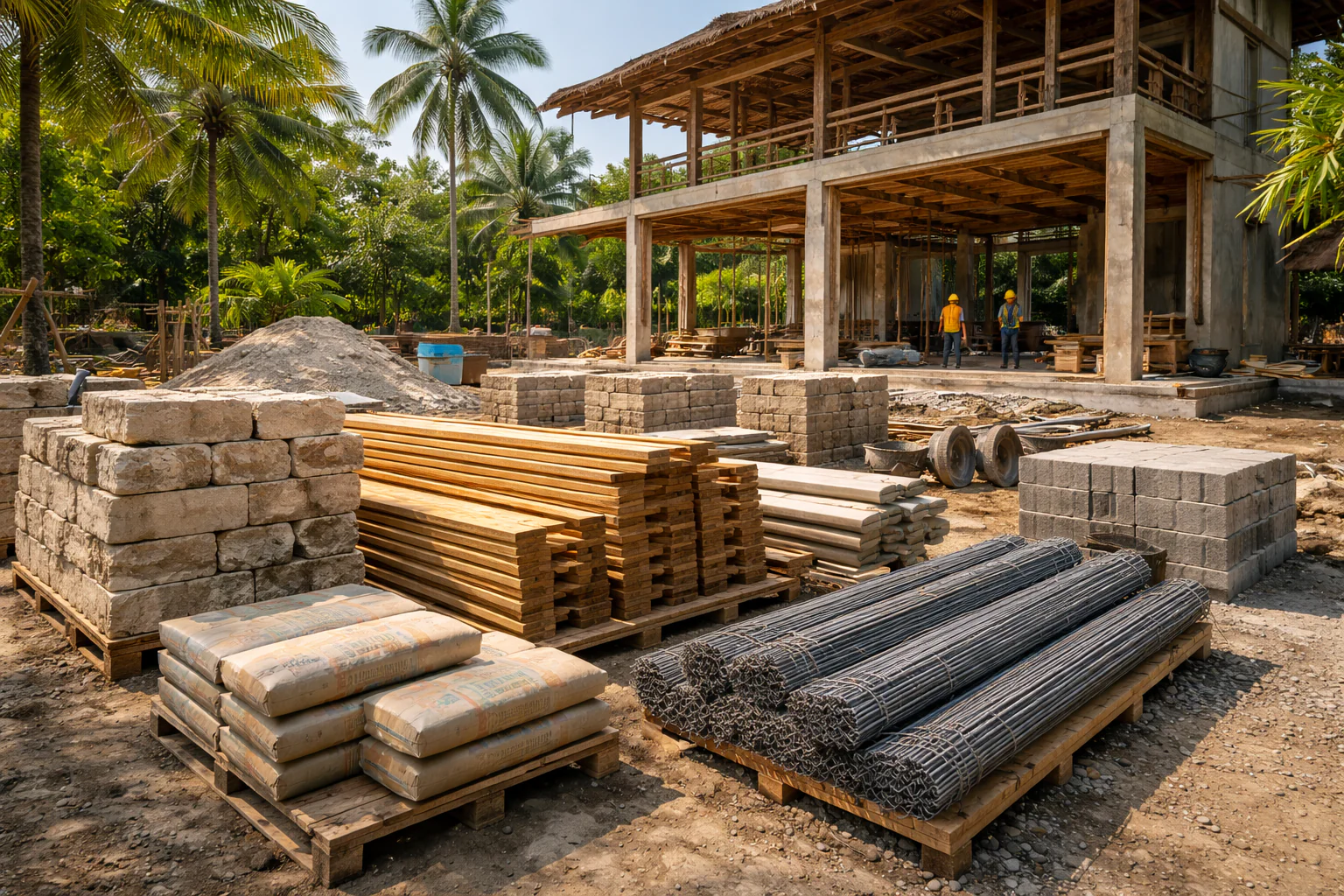
Knowing the right building materials for villas in Bali is a crucial first step before starting the construction or renovation process.
Bali has unique environmental characteristics: a humid tropical climate, high sun exposure, salty air in coastal areas, and strong aesthetic standards as an international tourist destination.
Without the right choice of materials, the villa is at risk of rapid deterioration, wasteful maintenance costs, and losing its appeal to tourists.
Whether you are a landowner, property investor, or villa builder, understanding the characteristics of building materials will help you make smarter, more efficient, and more valuable long-term decisions.
Bali's Environmental Characteristics Influence Material Selection
Bali experiences year-round high humidity, extreme seasonal rainfall, and intense UV exposure. These conditions require Balinese villa building materials that are not only structurally sound but also resistant to weathering, mold, and temperature changes.
Besides technical factors, Bali is also known for its tropical architectural style that prioritizes harmony with nature.
Therefore, the materials chosen must be able to blend visually with the surrounding environment, whether for private villas, resorts, or commercial properties managed with a hospitality approach.
This is the reason why villa owners often collaborate trusted villa contractor services who understand the local context of Bali, not just follow general design trends.
Structural Materials: Foundations and Building Frames
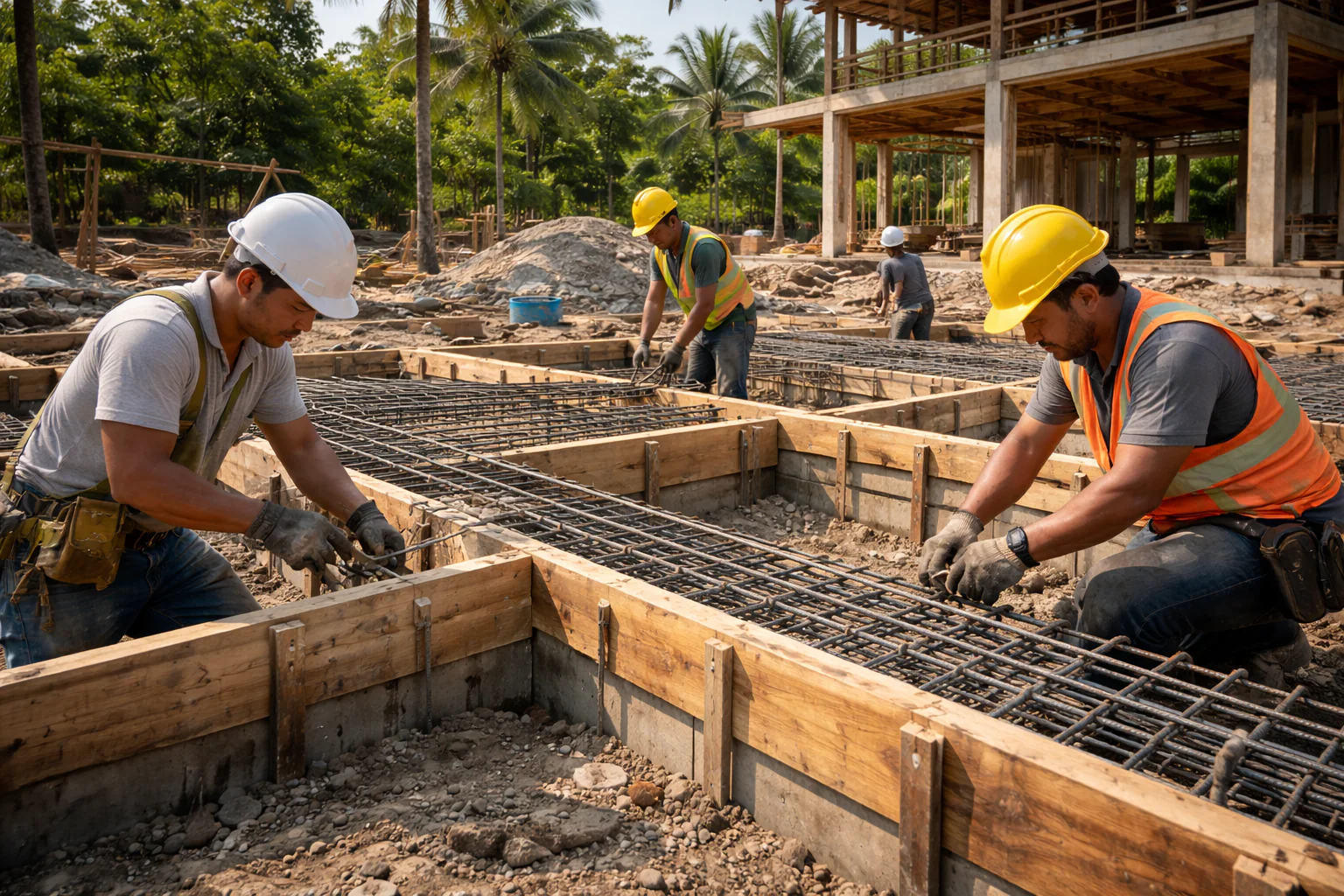
The structure is the most vital element in a villa building. In Bali, the use of high-quality reinforced concrete is the primary standard.
Concrete with the right composition and proper curing treatment is able to withstand high humidity and long-term building loads.
Reinforcing steel must also be of high quality and protected against corrosion. Many professional villa projects employ additional coating systems to prevent corrosion, especially in coastal areas.
In the practice of contract contractors, structural quality is often the main difference between buildings that last for decades and buildings that quickly experience premature damage.
Ideal Wall Materials for Villas in Bali
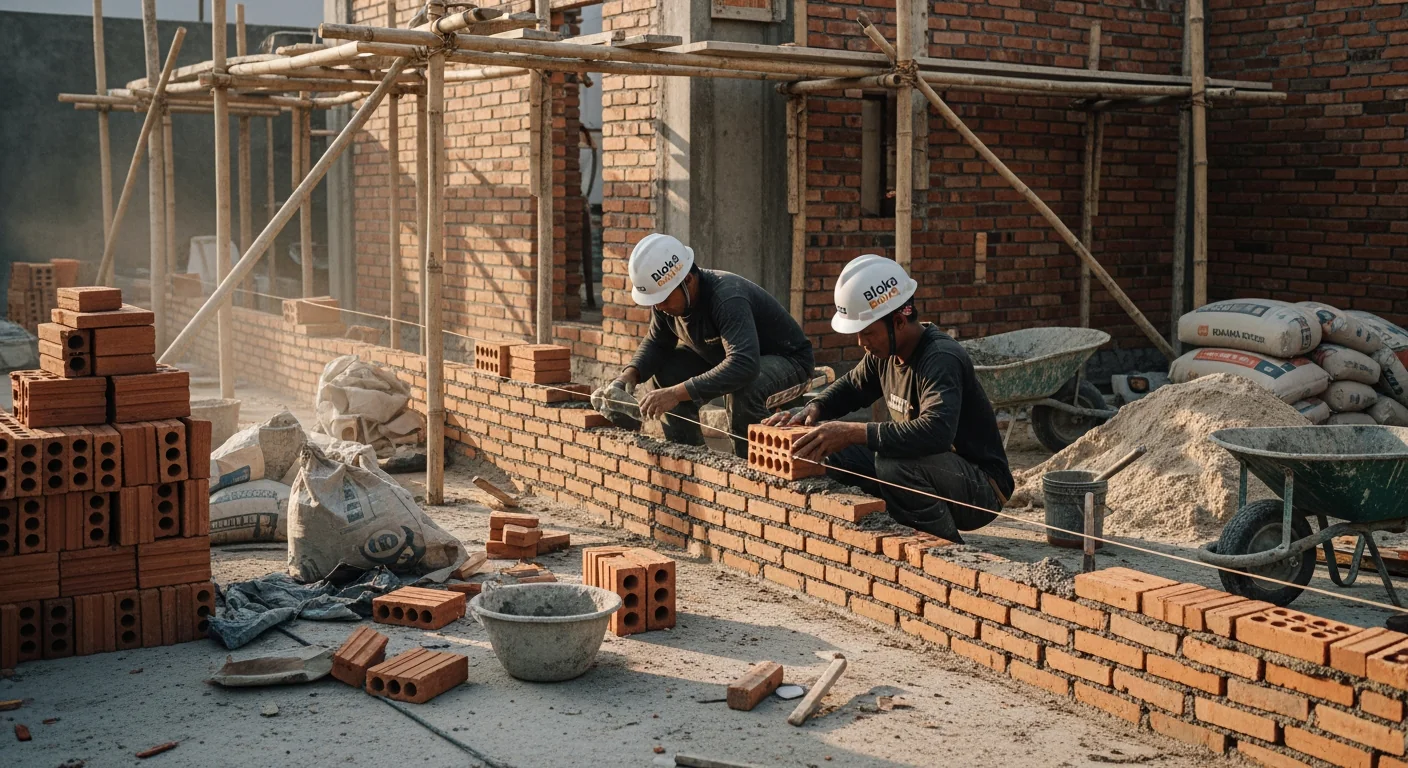
Walls are not just room dividers, but also elements that influence thermal comfort and aesthetics. Red brick remains a popular choice due to its ability to absorb heat and maintain a cool room temperature.
Another alternative is lightweight concrete blocks (AAC), which are lighter in weight and offer good thermal insulation. However, they require precision installation and proper finishing to prevent water absorption.
For villas with an exclusive concept, a combination of brick walls with natural stone elements is often used to create a natural and luxurious impression, especially in the facade and open space areas.
Natural Stone as a Visual Identity of the Villa
Natural stone is an iconic material in villa construction in Bali. Types such as Jogja paras, andesite, Palimanan, and Balinese padas are often used for exterior walls, fences, and landscaping elements.
The advantages of natural stone lie in its resistance to extreme weather and its high aesthetic value. Furthermore, natural stone provides an authentic feel that is highly sought after by tourists, especially for villas targeting the premium segment.
The proper use of natural stone also increases the selling value of the property, both for daily rental and long-term investment.
Heat and Moisture Resistant Roof Material
The roof plays a crucial role in the comfort of a villa. Clay tiles remain a favorite due to their heat-reducing properties and their compatibility with tropical architectural styles.
For modern concepts, wooden shingle roofs or concrete tiles with special finishes are also widely used. However, these roofing materials must be equipped with a strong framing system and good ventilation to prevent heat trapping.
Wrong roof selection is often the main cause of complaints from villa guests, ranging from hot rooms to leaks during the rainy season.
Wood as an Aesthetic and Structural Element
Wood is a material synonymous with Balinese villas. It's used for frames, doors, windows, ceilings, and decorative elements. Types of wood like teak, bengkirai, and ironwood are known for their high resistance to tropical weather.
However, wood must be treated with anti-termite treatment and regular finishing. Without proper maintenance, wood can become a building's weak point.
In many villa renovation service projects, replacing or rejuvenating wooden elements is a routine job to maintain the quality and appearance of the property.
Safe and Aesthetic Floor Materials
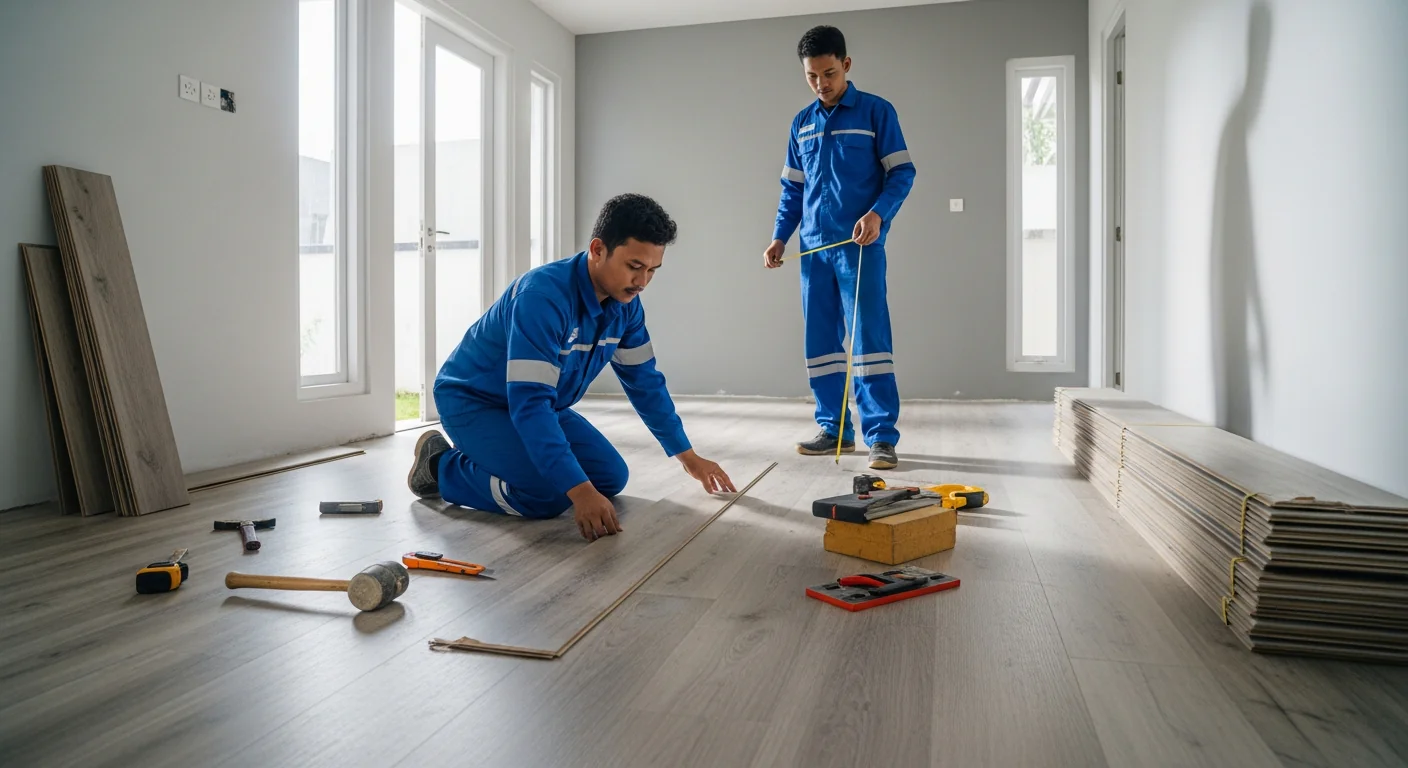
Villa flooring must meet two main requirements: aesthetics and safety. Non-slip ceramic, natural stone, and homogeneous tiles are often used for both indoor and outdoor areas.
For bathrooms and wet areas, choosing non-slip flooring is crucial for guest safety. This is where the role of bathroom renovation services becomes important, because small errors can impact the user experience.
Meanwhile, for the villa kitchen area, the floor must be easy to clean and resistant to oil and water stains, in line with kitchen renovation services that focus on function and cleanliness.
Ceiling Materials for Optimal Air Circulation
Ceilings in Balinese villas are often designed high to promote natural air circulation. Materials such as moisture-resistant gypsum, wood, or decorative bamboo combinations are commonly used.
The right ceiling not only improves thermal comfort but also enhances the character of the interior design. Villas with low ceilings and the wrong materials tend to feel stuffy and hot.
Glass and Openings for Natural Light
Modern villas in Bali almost always utilize wide openings with large glass windows. Tempered or laminated glass is used for safety and durability.
In addition to providing natural light, large openings also create a visual connection between the interior and the outdoors. This is a highly sought-after added value for tourists.
However, the choice of glass must take into account heat protection so that the room remains comfortable without excessive dependence on air conditioning.
Supporting Materials for Space Development
Over time, many villa owners expand their homes by adding rooms or adding supporting facilities. This is where material consistency becomes crucial to maintain a harmonious structure.
Poorly planned space development often detracts from the aesthetic and functional value of a villa. Therefore, early planning with a professional team is highly recommended.
Materials for Commercial Areas and Special Facilities
Some villas also feature commercial areas such as small restaurants, spas, or work spaces. For these needs, a commercial fit-out service is often used to ensure the materials selected meet operational and safety standards.
Additionally, specialized facilities like machine rooms, laundry rooms, or staff areas require materials that prioritize functionality over aesthetics. This approach is similar to office and specialty facility contractor projects, where efficiency and durability are prioritized.
The Importance of Material Synergy and Design Concepts
The best materials won't be optimal without a well-thought-out design concept. Therefore, villa owners should focus not only on material cost but also on its compatibility with the overall design.
Collaboration between architects, contractors, and owners will result in buildings that are not only beautiful, but also efficient in terms of long-term operational and maintenance costs.
Common Mistakes in Selecting Villa Materials
One of the most common mistakes is choosing materials solely based on appearance without considering durability. Another is neglecting installation quality, which is common in small-scale villa renovation projects.
Even high-quality materials will be suboptimal if installed without proper technical standards. Therefore, selecting an experienced implementation team is crucial to project success.
Conclusion: Material Investment is Property Value Investment
Understanding and recognizing suitable building materials for villas in Bali is not just a technical matter, but also part of a property investment strategy. The right materials will enhance comfort, extend the building's lifespan, and enhance the villa's appeal in both the rental and sales markets.
If you want to build, renovate or develop a villa in Bali with a professional and long-term oriented approach, entrust your project to Bloka Build.
Bloka Build offers comprehensive solutions, from planning and material selection to high-quality construction. Contact Bloka Build today and create a strong, beautiful, and high-value villa.