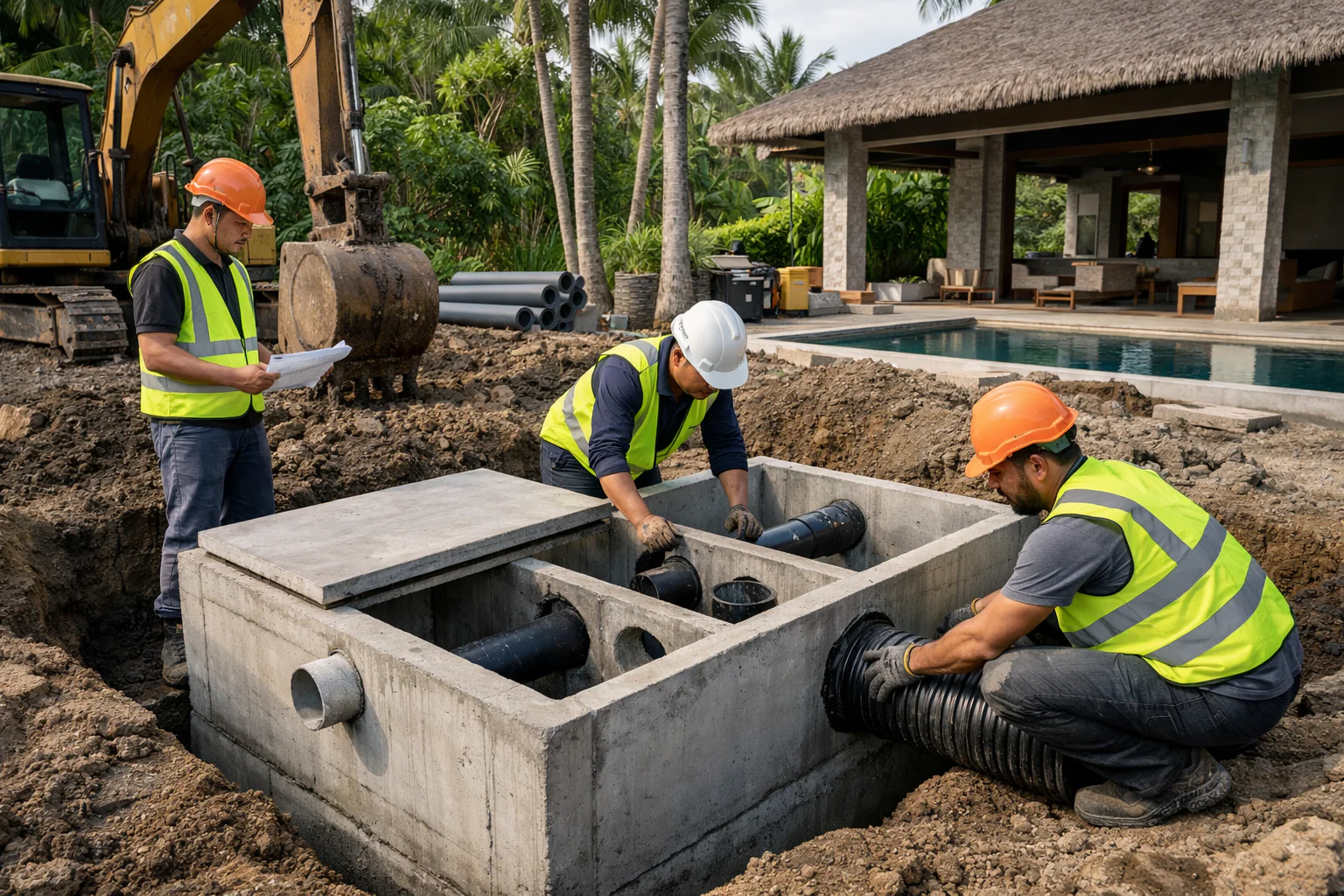

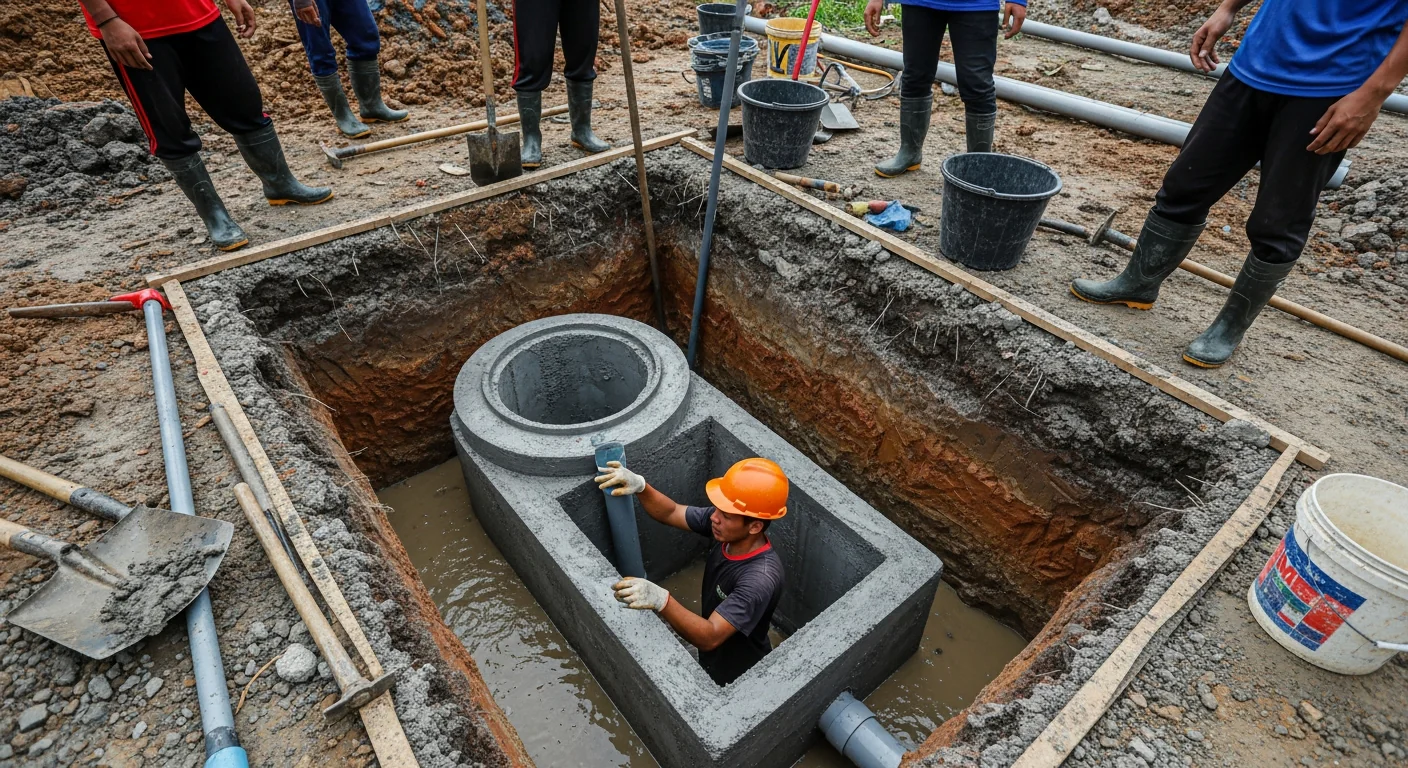
The difference between conventional and biofill septic tanks is an important topic often overlooked by homeowners, villa owners, and commercial buildings. Many focus on design, building structure, and interior aesthetics, but forget that sanitation systems are the foundation of long-term comfort.
Choosing the wrong septic tank can result in unpleasant odors, environmental pollution, and even large repair costs later on.
In the practice of villa building services, villa renovation services, and even contract contractor projects, selecting the type of septic tank is now a mandatory consideration.
This is especially true for modern buildings that prioritize cleanliness, land efficiency, and environmental friendliness. This article will discuss the differences between conventional and biofill septic tanks in depth, helping you determine the best option for your building's needs.
Understanding the Function of a Septic Tank in a Building
A septic tank isn't just a waste disposal site, but rather a primary domestic waste treatment system. Waste from toilets, bathrooms, and kitchens is collected, broken down, and then safely released into the environment.
In a bathroom renovation service project or add a room to the house, septic tanks are often elements whose capacity must be adjusted.
A common mistake that often occurs is using an old septic tank for a building that has experienced additional occupants or room functions.
As a result, the sanitation system doesn't function optimally and causes serious problems. Therefore, understanding septic tank types is a crucial first step in building planning.
What is a Conventional Septic Tank?
Conventional septic tanks are the oldest sanitation system used in Indonesia. They are generally constructed of cast-in-ground concrete and consist of one or two holding chambers.
Human waste will settle at the bottom of the tank, while wastewater slowly seeps into the ground through the infiltration field.
This system is still widely used in old houses, simple housing projects, and buildings that are built traditionally without modern sanitation calculations.
In some villa repair service projects, conventional septic tanks often become a source of problems because their capacity is no longer adequate.
How Conventional Septic Tanks Work
Conventional septic tanks operate passively. Waste enters the tank and then undergoes natural sedimentation.
Solids will settle to the bottom, while liquids will drain into the seepage area. The decomposition process relies on naturally occurring anaerobic bacteria without any additional filtration system.
Because the process is simple, this system is highly dependent on soil conditions. If the soil doesn't absorb water well, wastewater can overflow or pollute the surrounding environment. This is often a challenge for specialized facility contractors or high-density buildings.
Advantages of Conventional Septic Tanks
One of the advantages of conventional septic tanks is their relatively low initial cost. The materials are readily available, and the work can be done by a general builder. This is why this system is still used in small projects or older buildings.
Furthermore, conventional septic tanks don't require special technology. Maintenance is simple, although regular sludge removal is necessary. For buildings with limited occupants, this system is still considered sufficient.
Disadvantages of Conventional Septic Tanks
Despite their simplicity, conventional septic tanks have many limitations. One of these is the risk of groundwater contamination. Without a proper filtration system, wastewater can seep into and contaminate local wells.
Another problem is the unpleasant odor and full potential in a short time, especially if the building is undergoing renovations such as kitchen renovation services or adding a bathroom. This is why many villa architects no longer recommend conventional septic tanks for modern buildings.
What is a Biofill Septic Tank?
A biofill septic tank is a modern wastewater treatment system designed with filtration technology and active bacterial media. This system uses biofilter media to accelerate waste decomposition, resulting in a safer end result for the environment.
Biofills are typically made from high-quality fiberglass or plastic, with a closed design and controlled flow system. In villa construction service projects and... commercial fit out services, biofill is the main choice because it is more efficient and environmentally friendly.
How a Biofill Septic Tank Works
Biofill septic tanks work by utilizing aerobic and anaerobic bacteria that live in the filter media. Incoming wastewater undergoes several filtration stages, from initial sedimentation to biological decomposition.
Biofill wastewater is much cleaner than conventional systems. The resulting wastewater doesn't contaminate the soil and has minimal odor. This makes this system ideal for high-use buildings, such as offices, rental villas, or commercial buildings.
Advantages of Biofill Septic Tanks
The main advantage of biofill septic tanks is their environmental friendliness. This system is designed to minimize pollution and meet modern sanitation standards. Furthermore, biofills don't require extensive infiltration areas, making them ideal for small spaces.
In modern office or villa contractor projects, biofills offer long-term comfort due to their low problem rates. Maintenance is easier, and sludge removal is less frequent than with conventional septic tanks.
Disadvantages of Biofill Septic Tanks
Despite their technological superiority, biofill septic tanks have a higher initial cost. The unit and installation costs are higher than conventional systems. However, the cost is offset by the efficiency and long-term durability.
Furthermore, biofill installation must be carried out by professionals. Installation errors can disrupt the bacterial system. Therefore, it is important to use a contractor experienced in modern sanitation systems.
Comparison of Conventional and Biofill Septic Tanks from Various Aspects
From an environmental perspective, biofill is clearly superior due to its controlled filtration system. In terms of comfort, biofill is odor-free and more hygienic. Meanwhile, conventional septic tanks are still dependent on soil conditions and often cause problems in renovated buildings.
For the project villa renovation services, Switching from conventional septic tanks to biofill is often the primary solution for making buildings more livable and valuable. This also impacts the property's resale value and attractiveness.
Which is More Suitable for Homes, Villas, and Commercial Buildings?
The choice of septic tank system must be tailored to the building's function. For older homes with large plots and limited occupants, conventional septic tanks can still be used, provided they are regularly maintained.
However, for villas, modern homes, office buildings, or specialized facility contractor projects, a biofill septic tank is a much wiser choice. Besides being safer, this system supports current sustainability-oriented building standards.
Common Mistakes in Choosing a Septic Tank
Many people choose a septic tank based solely on price without considering the building's capacity and function. This mistake often occurs in small renovation projects that later evolve into high-volume buildings.
Without careful planning, an unsuitable septic tank will quickly fill up and cause recurring problems. Therefore, consulting with a professional contractor is highly recommended from the planning stage.
The Role of Professional Contractors in Sanitation Systems
Experienced contractors not only build structures but also ensure optimal sanitation systems. In contract contractor services, selecting the right septic tank is crucial to building quality.
With good planning, building owners not only get a beautiful house or villa, but also one that is comfortable and safe for the long term.
Conclusion: Don't Choose the Wrong Septic Tank
The difference between conventional and biofill septic tanks isn't just about price, but also about comfort, health, and sustainability. Conventional septic tanks are suitable for certain conditions, while biofills offer a modern solution for today's needs.
If you are planning a property development, renovation or construction project, make sure that sanitation systems are a top priority.