
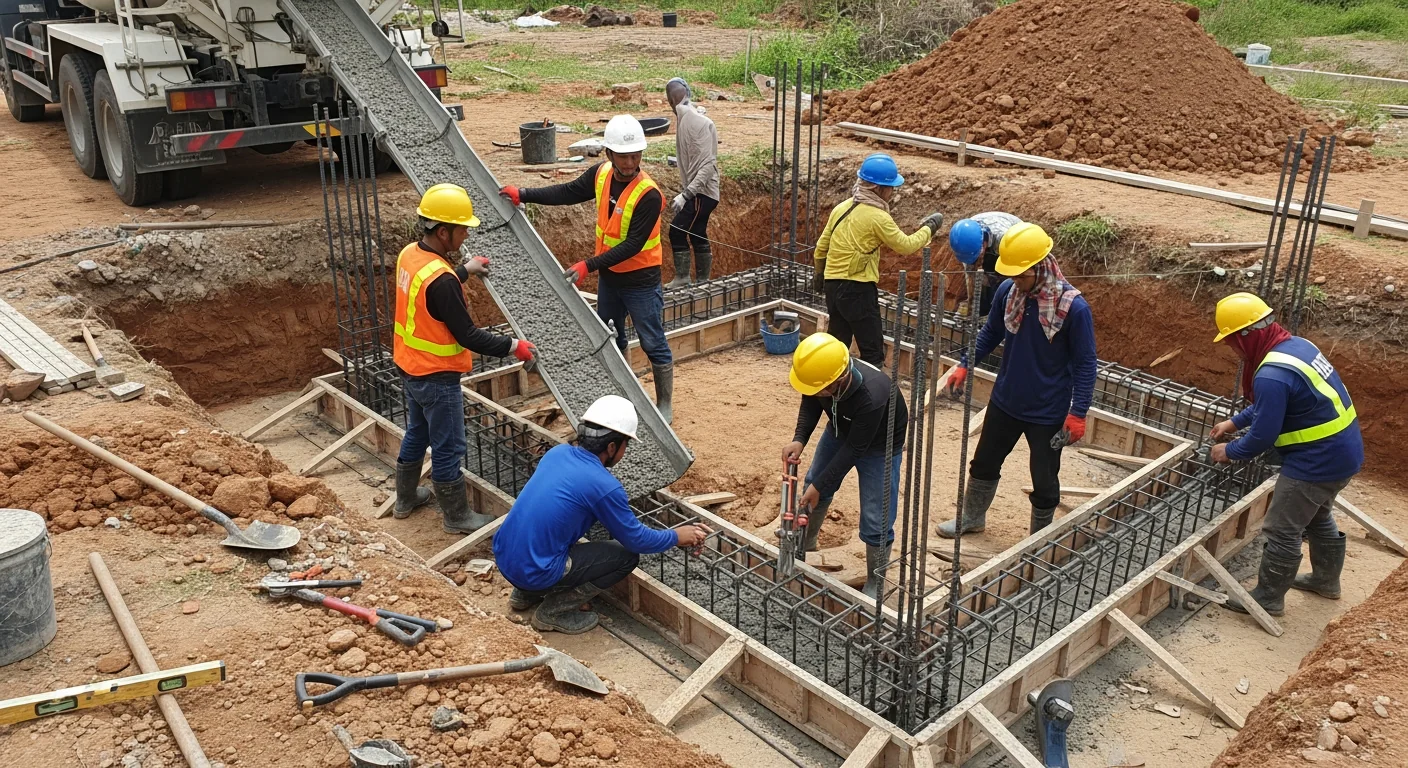
The footing foundation is the most crucial element in building construction, serving as the primary support for the entire building load above it. Mistakes in footing foundation planning or construction can seriously impact the strength, safety, and even the lifespan of the building.
Therefore, understanding the concept of this foundation is mandatory for anyone who plans to use home building services, carry out home renovation services, or add buildings such as adding rooms to the house.
For those of you in Palembang and its surroundings, choosing the right foundation must be adjusted to the soil conditions, building type, and long-term residential plans.
Through this article, Bloka Build as a Palembang contractor service will provide a complete review of what a footing foundation is, its function, types, advantages, and its application to various building needs.
What is a Footing Foundation?
Footing foundations are a type of shallow foundation used to transfer the building load directly to the hard ground below.
These foundations are typically square or rectangular and placed directly beneath the building columns. Due to their relatively simple construction, footing foundations are widely used in one- to two-story residential buildings.
In practice, this type of foundation is often the main choice for projects. home building services because it is cost-efficient, easy to work with, and strong enough for small to medium-scale buildings.
However, this type of foundation still requires careful structural calculations to prevent land subsidence or building cracks in the future.
The Main Function of Footing Foundations in Construction
Footing foundations have several important functions that cannot be replaced by other structural elements. Their primary function is to distribute the building's load evenly from the columns to the ground. With proper load distribution, the risk of a building tilting or sinking can be minimized.
Additionally, footing foundations also serve to maintain building stability against ground movement. In areas with relatively stable soil conditions, such as parts of Palembang, this type of foundation is an ideal solution for homes, small shophouses, and other supporting structures.
For home improvement or structural renovation projects, this type of foundation is also often used as additional reinforcement when there is an increase in building load, for example when adding a new floor or room.
Commonly Used Types of Footing Foundations
In the construction world, there's more than one type of footing. The choice depends on the building's load and soil conditions.
A single-foot foundation is the most common type. This foundation supports a single column and is typically used in simple homes. It is square or rectangular in shape with a specific thickness based on structural calculations.
Combined footing foundations are used when the columns are too close together to support the foundations themselves. They are typically used in buildings with limited space, such as townhouses or boarding houses and shophouses in densely populated areas.
There are also continuous footing foundations that support multiple columns at once. This type is often used in elongated buildings or buildings with evenly distributed loads along the length of the structure.
The selection of the type of footing foundation should be consulted with a home architect or experienced contractor to ensure it suits the building's needs.
When is a Footing Foundation Suitable?
Footing foundations are ideal for one- to two-story buildings with relatively light to moderate loads. Residential homes, small shophouses, and even small-scale office buildings generally use this type of foundation.
In home renovation projects, this type of foundation is also ideal when homeowners want to add rooms or expand the building without having to completely demolish the existing structure. With proper calculations, a footing foundation can safely support the additional load.
However, for high-rise buildings or on soft ground, footings are usually not recommended and need to be combined with other types of foundations.
Correct Stages of Footing Foundation Work
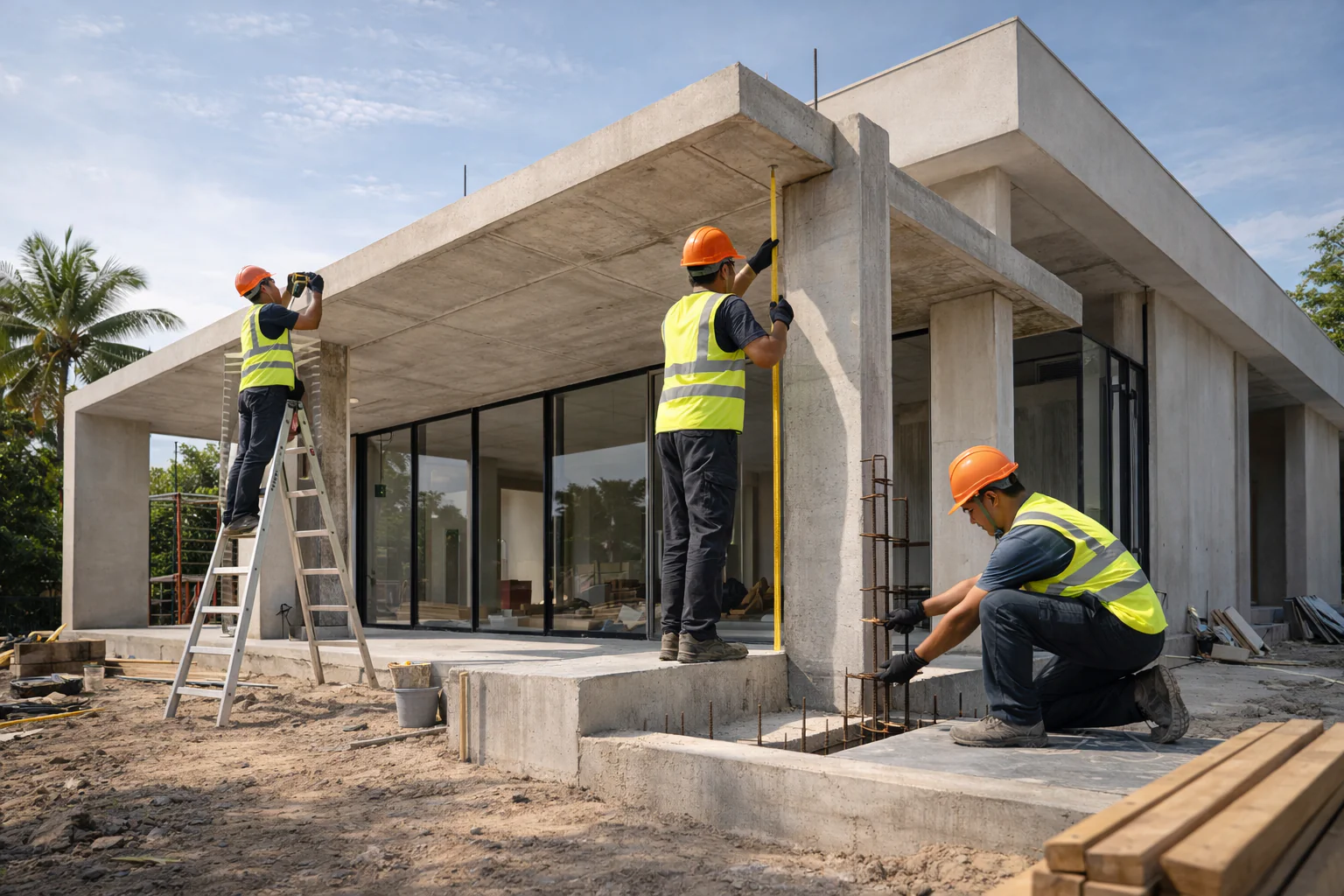
This type of foundation construction should not be done haphazardly. The first step is measuring and excavating the soil according to the working drawings. The excavation depth must reach firm ground for the foundation to function optimally.
After that, a work floor was installed as the foundation base. The work floor serves to maintain cleanliness and prevent the concrete from mixing with soil. The next step was installing the steel reinforcement according to the structural calculations.
The casting process begins after all preparations are complete. The concrete must be thoroughly compacted to eliminate air pockets. After casting, the foundation requires curing time to achieve optimal strength before proceeding with the column work.
Bloka Build, as a contract contractor, ensures that each stage is carried out according to technical standards for long-term building safety.
Footing Foundation for Building Renovations and Additions
Many people think that footings are only used for new buildings. In fact, they are also very relevant for other projects. bathroom renovation services, kitchen renovation services, or adding rooms to the house.
When structural renovations are undertaken, additional footings are often installed to support the new load. For example, when adding a room to the rear of a house or expanding a kitchen, this type of footing is an effective solution without disturbing the main structure.
In commercial projects such as commercial fit out services or office contractors, this type of foundation is also used to support heavy partitions or additional structural elements.
Advantages of Footing Foundations Compared to Other Types
One of the main advantages of footing foundations is their relatively affordable cost. Compared to deep foundations like piles, this type of foundation is much more economical and quicker to construct.
Furthermore, the work doesn't require heavy equipment, making it suitable for densely populated residential areas. This is particularly advantageous for residential projects in urban areas.
Footing foundations are also flexible for future building expansion. With proper initial calculations, a building can be expanded without requiring complete foundation replacement.
Common Mistakes in Footing Construction
The most common mistake is digging that doesn't reach firm ground. This can cause foundation subsidence and building cracks. Another mistake is using substandard reinforcing steel.
Lack of supervision during casting is also often a major cause of foundation failure. Poorly compacted concrete will reduce the strength of the structure.
Therefore, using an experienced specialized facility contractor like Bloka Build is a wise step to avoid such risks.
Why Should Footings Be Done by Professional Contractors?
A foundation is a long-term investment. Small mistakes early on can lead to significant losses in the future. By using a professional contractor, you'll receive accurate structural calculations, quality materials, and workmanship that meets technical standards.
Bloka Build, a Palembang-based contractor, has experience handling a wide range of projects, from residential construction and renovations to commercial buildings. Each project is executed with a professional and transparent approach.
Conclusion
Footings are the primary foundation that determines a building's strength and safety. With the right choice of foundation type and standard construction, this type of foundation can optimally support a building over the long term.
Whether for new buildings, renovations, or room additions, this type of foundation remains an efficient and reliable solution when handled by professionals.
Trust your building foundation to Bloka Build
If you are planning to build or renovate a house in Palembang and want to ensure the footing is done correctly, Bloka Build is ready to help you.
We offer home building, renovation, home improvement, and commercial projects, all with the highest construction standards. Consult with us about your building needs now and create a sturdy, safe, and durable home with Bloka Build.