
Pile foundations are a type of foundation used to support buildings on unstable, soft, or low-bearing soil.
In the world of modern construction, especially in areas with soil characteristics such as Palembang and its surroundings, this foundation system is an important solution to ensure buildings remain safe, strong, and durable in the long term.
For those of you who are planning to build a house, renovate an old building, or a commercial project, understanding the concept of foundations from the start is a crucial step.
Whether using a home building service, home renovation service, or a contractor, the decision on the type of foundation will greatly affect the strength of the structure and the overall cost of the project.
What is a Pile Foundation?
A pile foundation is a deep foundation that uses long piles made of concrete, steel, or wood that are embedded in the ground until they reach a hard layer of soil.
The main purpose of this foundation is to transfer the building load to a more stable layer of soil below the surface.
Unlike shallow foundations such as river stone foundations, pile systems do not rely on surface soil.
Therefore, this foundation is very suitable for use in areas with swampy soil, peat soil, or soft soil which is often found in lowland areas and near rivers.
In practice, this foundation is widely used by contractors for special facilities, multi-storey building projects, and private residences that prioritize long-term structural strength.
Main Function of Pile Foundation
Foundations are not just the basic elements of a building, but vital components that determine the overall stability of the structure. Here are some of the main functions of pile foundations:
First, the foundation serves to distribute the building's load evenly to the hard ground. The load from the walls, floors, roof, and even occupant activity is transferred through the piles to the supporting soil.
Second, pile foundations play a role in preventing uneven building settlement. On soft soils, buildings without proper foundations are at high risk of cracking, tilting, or even collapsing.
Third, this foundation helps improve building safety against ground movement, vibrations, and changing environmental conditions. This is why this system is often used by office contractors, boarding house and shophouse contractors, and other commercial building projects.
When is a Pile Foundation Needed?
Not all buildings require pile foundations. However, under certain circumstances, their use is highly recommended. One example is when soil tests indicate low bearing capacity in the upper layers.
This foundation is also needed in the construction of two-story or more houses, buildings with heavy loads, and projects that stand on former swamp land or embankment areas.
In some cases of home renovation services, pile foundations are used when adding floors or adding rooms to the house vertically.
In addition, buildings with special functions such as commercial kitchens, sanitation areas, or rooms with heavy installations—for example, in kitchen renovation services and bathroom renovation services—often require a stronger foundation structure to ensure long-term safety.
Types of Piles in Construction
In the construction world, piles come in several types based on their material and installation method. Precast concrete piles are the most commonly used due to their strength, durability, and relative ease of installation.
Besides concrete, steel piles are also frequently used for large-scale projects and industrial buildings. Meanwhile, wooden piles are now rarely used, except in special situations and temporary structures.
The selection of pile type is usually determined by the home architect and the contractor's technical team after conducting an analysis of the soil and the building's structural requirements.
Pile Foundation Installation Process
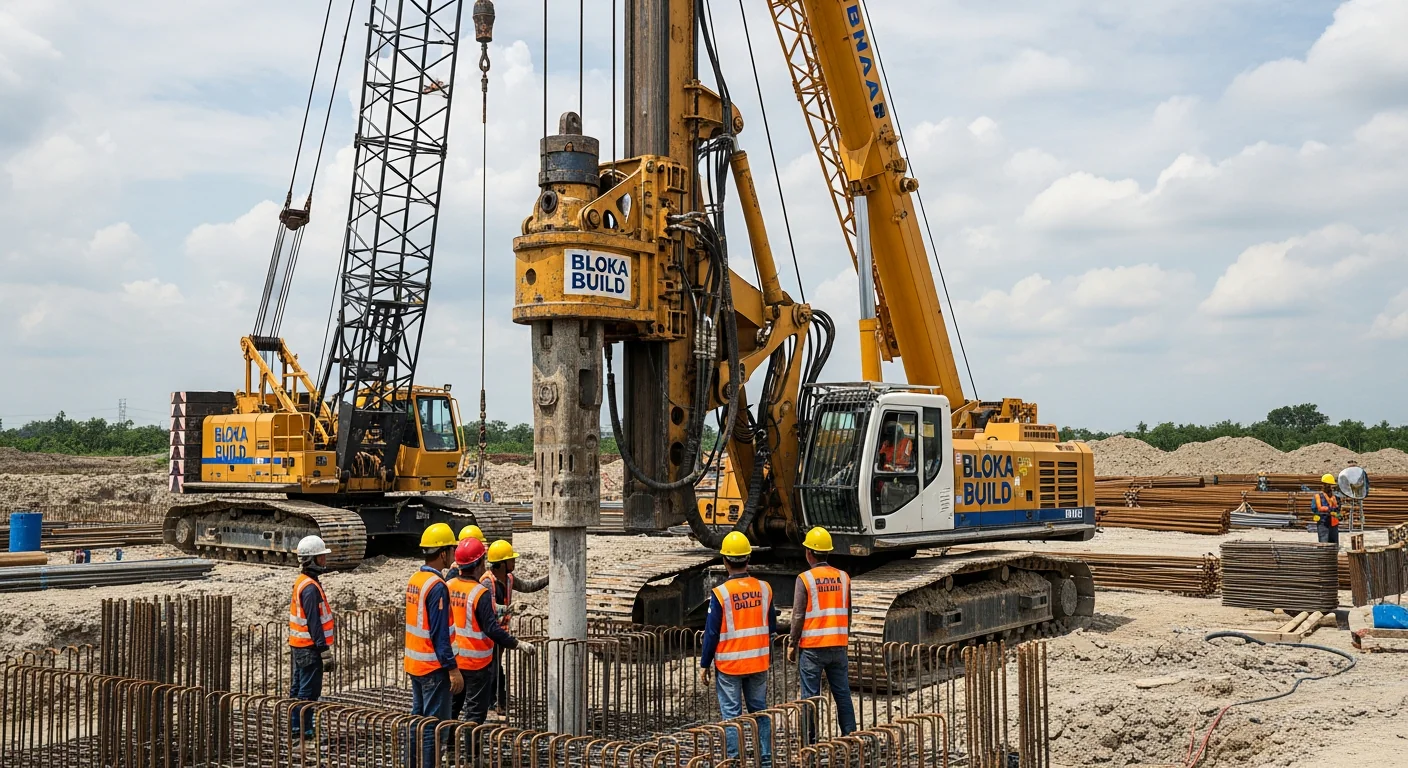
Installing pile foundations requires specialized equipment and professional personnel. The process begins with a land survey and determining pile locations according to the working drawings.
Next, the piles will be installed using a hydraulic pile driver or diesel hammer to the specified depth. This process must be closely monitored to ensure the pile position and depth comply with technical calculations.
Once the piles are installed, their tops are cut and joined with pile caps to connect the foundation to the building structure above. This step is crucial for the quality of the final result and is usually handled by experienced contractors.
Advantages of Pile Foundations
One of the main advantages of pile foundations is their high strength. They can support heavy, multi-story buildings without the risk of significant land subsidence.
Furthermore, this foundation is relatively stable against changes in soil and environmental conditions. For areas with high rainfall and soft soil characteristics like Palembang, this advantage is a significant plus.
In the long term, using a proper foundation will reduce the need for home repairs due to structural damage. This means that, despite the higher initial cost, this investment is more economical in the long run.
Disadvantages to Consider
Despite its many advantages, pile foundations also have several limitations. One of these is the relatively higher installation costs compared to shallow foundations.
Furthermore, the installation process can generate vibrations and noise that could potentially disturb the surrounding environment. Therefore, the choice of piling method and work schedule must be carefully planned, especially in densely populated residential areas.
With the support of professional contractors like Bloka Build, these obstacles can be minimized through proper technical planning and good communication with the project owner.
The Role of Professional Contractors in Foundation Work
Foundation work isn't a place for trial and error. A small mistake at this stage can have a significant impact on the entire structure. That's why it's crucial to use a home building service with experience and expertise.
A professional contractor will ensure that all stages, from land surveys and structural calculations to foundation installation, comply with technical standards. This is crucial for both residential and commercial projects. commercial fit out services and special facility buildings.
Bloka Build as a Palembang contractor service understands very well the character of local land and the needs of building structures in the South Sumatra region.
Pile Foundations for Homes and Commercial Buildings
The use of pile foundations isn't limited to large buildings. Modern homes, especially those with two or more stories, also strongly recommend using this system when soil conditions are less than ideal.
For commercial buildings such as shophouses, offices, or boarding houses, a strong foundation will support long-term activities without the risk of premature damage.
This is the reason why many property owners entrust their projects to boarding house and shophouse contractors who understand the importance of quality foundations.
Conclusion
Pile foundations are the right solution for creating sturdy, stable, and long-lasting buildings, especially on soft or less stable ground.
With careful planning and implementation by professionals, this foundation is able to provide long-term structural security.
Whether building a new home, renovating, or a commercial project, choosing the right foundation is an important investment that should not be overlooked.
Trust your home foundation to Bloka Build
If you are planning to build or renovate a building in Palembang and need a strong and reliable foundation, Bloka Build is ready to be your best partner.
We provide complete services starting from home building services, renovations, to commercial building projects and special facilities with professional and transparent standards.
Contact Bloka Build now for a FREE consultation and create a building that is sturdy, safe, and has long-term value.