
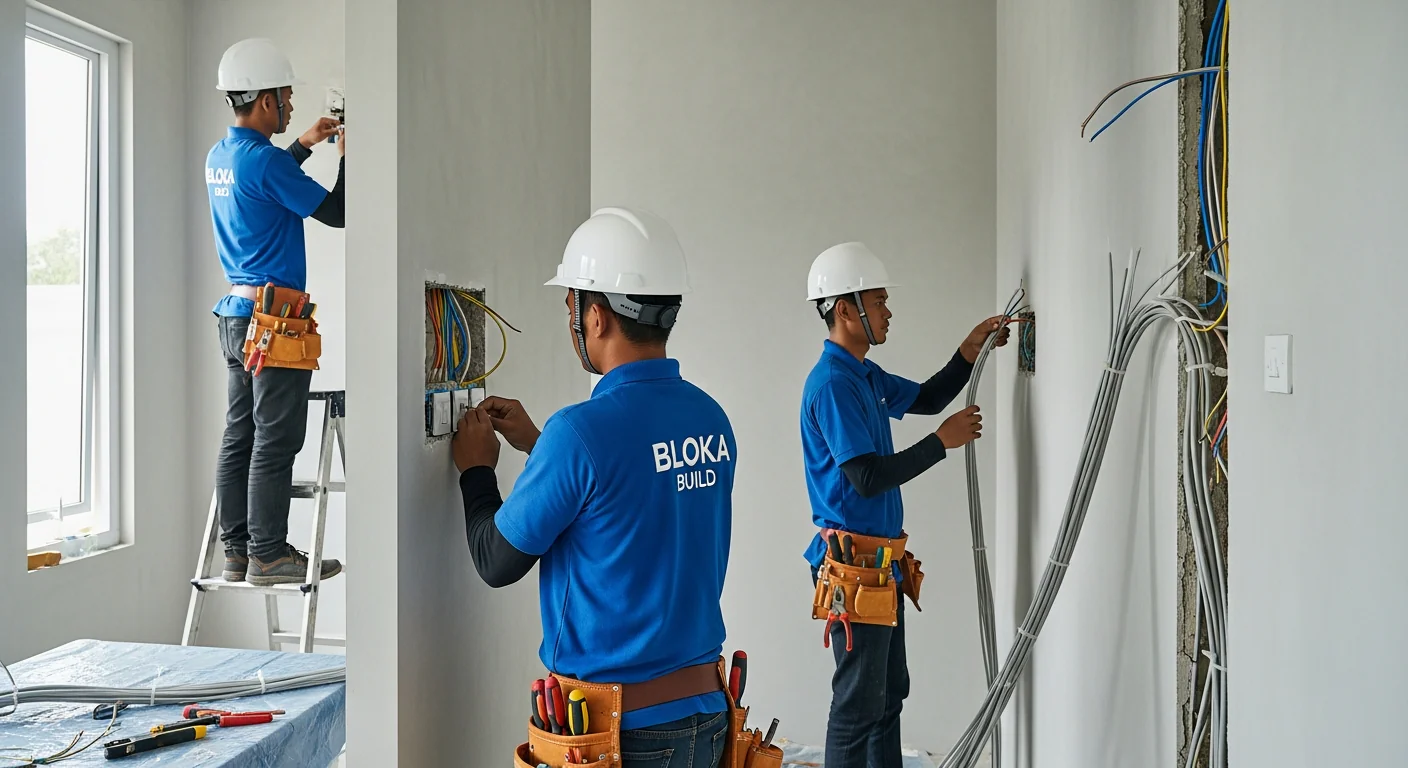
The position of switches and sockets is a small detail in a home, but it has a big impact on the comfort, safety, and overall function of the residence.
Many new homeowners or those undergoing renovations often neglect the placement of switches and sockets, so that after the house is finished being built, complaints arise such as dangling cables, insufficient sockets, or switches that are difficult to reach.
As a provider of home building services and home renovation services in Palembang, Bloka Build frequently encounters cases where homeowners have to re-demolish their homes simply because of incorrect electrical installations. However, with proper planning from the start, this could have been avoided.
This article will discuss in detail how to determine the position of switches and power outlets that are safe, comfortable, and meet the needs of modern home residents.
Why is the Position of Switches and Sockets So Important?
Switches and sockets aren't just for turning on lights or plugging in electrical appliances. Their placement directly impacts safety, efficiency, and interior aesthetics.
Incorrect positioning can cause various problems, ranging from the risk of short circuits, tripping over cables, to discomfort in daily activities.
In home improvement projects or adding rooms to a house, this mistake often leads to unnecessary additional renovations.
With careful planning, the position of switches and sockets can actually significantly improve the quality of life of the home's occupants.
Basic Principles for Determining the Ideal Switch Position
Switch placement should consider occupant habits, room function, and safety standards. In general, switches should be easily accessible, unobstructed by furniture, and logically positioned within the flow of activities.
In residential homes, switches are usually installed near the entrance to the room so that the lights can be turned on before entering completely.
The ideal height of the switch is between 120–140 cm from the floor, adjusting to the average height of Indonesian adults.
In projects involving home architects, switch placement is often adjusted to fit the furniture layout to avoid being obscured by cabinets or doors. This is especially important in minimalist homes with limited space.
Switch Placement Based on Room Function
Each room has different characteristics and lighting needs, so the position of the switch cannot be standardized.
Switches in the Living Room and Family Room
The living room and family room are high-traffic areas. The main switch should be located near the entrance, while additional switches can be placed at various locations to control different lights, such as the main light and accent lights.
In modern home building service projects, the use of double switches or multi-level lighting systems is highly recommended so that the room atmosphere can be adjusted according to needs.
Switch in the Bedroom
Bedrooms require maximum comfort. Ideally, in addition to the main switch near the door, there should be an additional switch near the bed. This makes it easy for occupants to turn off the lights without having to get up.
In bedroom renovations, especially in home add-on services, placing switches near the bed is often a top priority for long-term comfort.
Switch in the Bathroom
Bathrooms have high humidity levels, so switches should be placed outdoors or in an area completely protected from water splashes. This is an important standard in projects. bathroom renovation services to prevent the risk of electric shock.
Basic Principles for Safe Placement of Electrical Outlets
Electrical outlets serve as the primary power source for various electrical devices. Incorrect placement not only disrupts aesthetics but also poses a safety risk to occupants.
Electrical outlets should not be installed too low in areas prone to water, especially in kitchens and bathrooms. The ideal distance from the floor is generally around 30–40 cm, except for special needs such as AC or television outlets.
In a contract contractor project, the calculation of the number and position of power outlets is carried out from the planning stage to avoid a shortage of plugs later on.
Position of Power Outlets in Each Room
Power Outlet in the Living Room
The living room needs power outlets for the television, internet router, floor lamp, or electronic device chargers. Placing them behind the television or in a strategic corner of the room will keep cables tidy and out of the way.
In homes that also function as small offices, an office contractor-style approach is often applied to ensure efficient and safe electricity distribution.
Power Outlets in the Bedroom
At least two power outlets on each side of the bed are highly recommended. This makes it easier to use a night light, phone charger, or other devices without dangling cords.
Power Outlets in the Kitchen
The kitchen is an area with high electricity demands. Appliances such as refrigerators, microwaves, rice cookers, and blenders require dedicated power outlets. In the project kitchen renovation services, the power outlet is usually installed above the kitchen table at a safe height from water splashes.
Electrical Outlets in the Bathroom
Bathroom outlets should only be installed if absolutely necessary, such as for a water heater or hair dryer, and must meet waterproof standards. Their placement and specifications are usually handled by a specialized facility contractor.
Common Mistakes in Switch and Socket Placement
Many mistakes often occur due to a lack of planning or a desire to save money at the outset. Some of these include:
Switches blocked by doors or cabinets, too few outlets requiring additional terminals, and outlets installed too close to water sources are common mistakes in renovation projects without professional assistance.
Through Bloka Build's experience as a home renovation service and boarding house & shophouse contractor, repairing electrical installations due to initial errors actually costs more than planned from the start.
Electrical Safety Standards to Pay Attention to
In addition to positioning, safety standards must also be considered. Use quality materials, cables appropriate to the load capacity, and a proper grounding system. Ensure all electrical work is performed by experienced personnel and adheres to national standards.
In large-scale projects such as commercial fit-out services or boarding houses and shophouses, this standard becomes very crucial because it relates to the safety of many people.
The Role of Professional Contractors in Electrical Installation Planning
Hiring a professional contractor isn't just about building walls and a roof. Electrical installation is a vital part that must be thoroughly planned.
Bloka Build as an experienced Palembang contractor always integrates switch and socket planning with interior design, room function, and client needs.
Whether for residential homes, kitchen renovations, bathrooms, or commercial buildings, all are designed to be safe, tidy, and comfortable for long-term use.
Small Investment for Long-Term Comfort
Determining the location of switches and outlets may seem trivial, but the impact is significant. With proper planning, you'll not only achieve a comfortable home but also a safe and efficient one for daily activities.
A small mistake early on could result in remodeling, wall demolition, and significant additional costs. Therefore, involving an experienced contractor from the start is a smart move.
Create a Safe and Comfortable Home with Bloka Build
If you are planning a new home construction, home renovation, bathroom renovation, kitchen renovation, or room addition, do not overlook important details such as the position of switches and electrical outlets.
Bloka Build, a trusted Palembang contractor service, is ready to help you plan and execute construction with high safety standards and neat results.
From residential homes, boarding houses & shophouses, to commercial fit-outs and special facilities, everything is handled professionally and transparently.
Contact Bloka Build now and create a safe, comfortable, and high-quality home, right down to the smallest detail.